Key Takeaways
- OFAC governs any crypto business touching U.S. markets, dollars, or personnel, regardless of where the company is headquartered. Because it operates on a strict liability standard, platforms are legally responsible for compliance gaps whether a violation was accidental or intentional.
- Most crypto violations occur due to weak geographic IP blocking, outdated database checks, or a failure to screen counterparty wallets in real time.
- Processing a transaction tied to a blacklisted address triggers a violation even if neither transacting party is aware of the connection.
- Effective compliance requires proactive, multi-layered defenses like real-time SDN list screening, device metadata geo-blocking, and Know-Your-Transaction (KYT) tools.
- These automated systems must be integrated natively into a platform’s core architecture from day one rather than retrofitted later.
As cryptocurrency adoption accelerates globally, one regulatory body continues to define the compliance baseline for the entire industry: the Office of Foreign Assets Control (OFAC). Whether you operate a centralized exchange, a DeFi protocol, or an enterprise tokenization platform, understanding OFAC isn’t optional; it’s foundational to staying in business.
What Is OFAC? Crypto Compliance in 2026
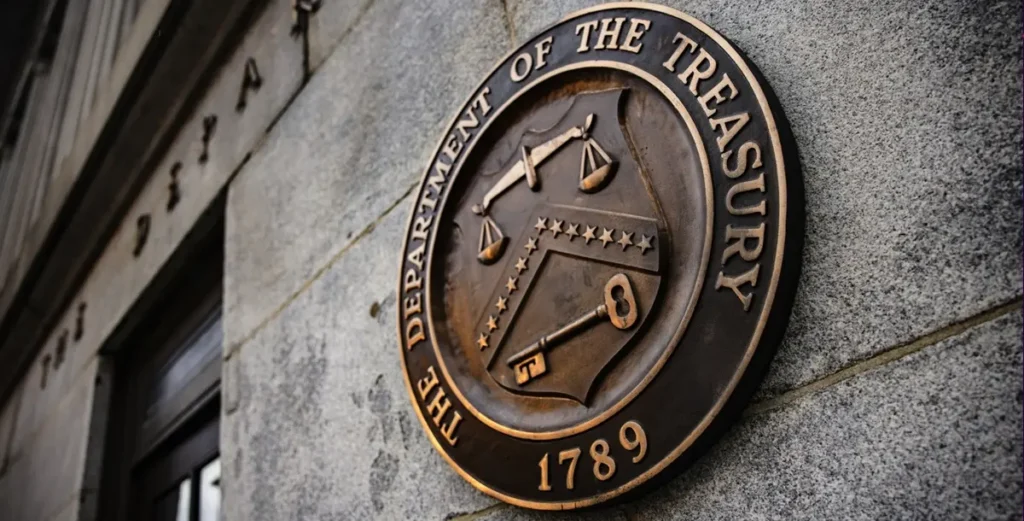
The Office of Foreign Assets Control (OFAC) is a U.S. Treasury agency responsible for administering and enforcing economic sanctions programs. Its core mission is to protect U.S. national security and foreign policy by cutting off hostile actors, including sanctioned governments, organizations, and individuals, from the global financial system.
What makes OFAC uniquely powerful is its extraterritorial reach. It doesn’t just govern U.S.-based companies. Any business that:
- Operates internationally while touching U.S. markets
- Processes U.S. dollar transactions
- Employs U.S. persons or has U.S.-based governance participants
…can fall within OFAC’s jurisdiction, regardless of where that business is incorporated.
For crypto and Web3 companies, OFAC is now one of the most consequential compliance hurdles. Because blockchain transactions are borderless and pseudonymous, OFAC aggressively targets this space, going as far as blacklisting specific crypto wallet addresses alongside traditional names and countries.
This is why every major Know-Your-Transaction (KYT) tool (such as one from ChainUp) is built entirely on OFAC data. OFAC provides the legal “blacklist,” and KYT tools ingest this raw government data in real time to automatically flag and block transactions from sanctioned networks before they ever hit a platform’s ledger.
How Does OFAC Work? Key Enforcement Tools
OFAC’s primary instrument is the Specially Designated Nationals (SDN) List, a regularly updated register of individuals, entities, and now blockchain addresses that U.S. persons are prohibited from transacting with.
In recent years, OFAC has extended this framework aggressively into the crypto space:
- Wallet address sanctions: OFAC has added hundreds of cryptocurrency wallet addresses to the SDN list, including those linked to ransomware groups, North Korean state hackers (notably the Lazarus Group), and terrorist financing networks.
- Smart contract blacklisting: In May 2026, OFAC aggressively targeted a major money laundering pipeline for the Sinaloa Cartel, blacklisting a series of Ethereum addresses used to convert street-level cash into crypto. This underscores OFAC’s current strategy of hunting down specific, cross-border criminal nodes rather than broad software tools.
- Protocol-level enforcement: OFAC has signaled that blockchain identifiers, wallets, smart contracts, and DeFi protocols are treated the same as traditional bank accounts and corporate entities under sanctions law.
These moves reflect a deliberate regulatory posture: the tools change, but the legal obligations do not.
The Anatomy of an OFAC Violation: Common Exposure Points
Crypto businesses almost never intentionally violate OFAC rules. Instead, penalties usually result from preventable operational gaps, such as weak IP blocking, outdated database checks, or a failure to screen for newly blacklisted wallets in real time.
Here are the three most common exposure points:
1. Processing transactions involving sanctioned wallet addresses
If a user on your platform sends or receives funds from a wallet on the SDN list, your platform has potentially facilitated a sanctions violation, even if neither party knew.
2. Allowing access from embargoed jurisdictions
Users connecting from Iran, North Korea, Cuba, Syria, and other OFAC-sanctioned countries must be blocked. Kraken and Bittrex both faced multi-million-dollar penalties for exactly this failure.
3. DeFi governance exposure
OFAC has made clear that “decentralized” does not mean exempt. If U.S. persons hold governance tokens or exercise influence over a protocol, they and potentially the protocol itself carry compliance obligations.

What Is the Difference Between OFAC Compliance and KYC/AML?
These terms are often conflated, but they address distinct risks:
|
Compliance Area |
Focus |
Key Obligation |
|
OFAC / Sanctions |
Who you transact with |
Screen against SDN list; block sanctioned wallets and jurisdictions |
|
KYC (Know Your Customer) |
Who your user is |
Verify identity before onboarding |
|
AML (Anti-Money Laundering) |
How funds move |
Monitor transaction patterns for suspicious behavior |
|
KYT (Know Your Transaction) |
On-chain activity |
Screen wallet history and flag high-risk addresses in real time |
OFAC compliance sits at the intersection of all four. A user may pass KYC verification and still trigger an OFAC violation if their wallet has undisclosed exposure to sanctioned addresses.
7 Core Requirements of Crypto OFAC Compliance
Building a compliant crypto operation in 2026 requires more than a one-time SDN check. Here’s what a robust OFAC compliance program looks like:
- Real-time SDN list screening — Wallet addresses and counterparty identities must be checked against the latest OFAC list at every transaction, not just at onboarding.
- Geo-blocking and IP filtering — Access from embargoed jurisdictions must be blocked. This requires layered controls: IP detection, device metadata, and user-declared residency checks.
- KYT (Know Your Transaction) integration — On-chain analytics tools flag wallets that are exposed to sanctioned entities, mixers, darknet markets, and other high-risk sources.
- Governance token review — If U.S. persons hold decision-making power in your protocol, a compliance framework must apply to that governance layer.
- Documented compliance policies — OFAC expects organizations to maintain written sanctions compliance programs. Documentation serves both as legal protection and as an audit requirement.
- Incident response procedures — If a potentially sanctioned transaction is detected, there must be a clear process: freeze, report, and engage counsel.
- Regular audits and list updates — The SDN list is updated frequently. Stale screening data is a liability, not a safeguard.
Types of OFAC Sanctions Programs Relevant to Crypto
OFAC administers dozens of sanctions programs. The ones most directly relevant to crypto businesses include:
- Cyber-related sanctions (E.O. 13694/13757): Targets individuals and entities involved in malicious cyber activity, including ransomware operators and state-sponsored hacking groups.
- North Korea (DPRK) sanctions: The Lazarus Group and affiliated entities have stolen billions in crypto. Any interaction with flagged wallets may constitute a violation.
- Iran, Cuba, Syria, and the Crimea region programs: Comprehensive sanctions that require blanket access restrictions and not just individual screening.
- Counter-narcotics and counter-terrorism programs: Increasingly extended to crypto wallets used for financing.
What Happens If You Don’t Comply with OFAC?
Failing to comply with OFAC regulations is often an existential threat to a crypto business. Because OFAC operates on a “strict liability” standard, the agency does not care whether a violation was a deliberate criminal act or an accidental oversight. If a sanctioned transaction slips through your system, your platform is legally responsible.
For most companies, the damage unfolds in a brutal chain reaction. It usually starts with massive civil penalties, like the multi-million-dollar fines levied against exchanges like Bittrex and Kraken for weak geographic screening. Following a fine, a business will almost always lose its banking relationships overnight. Traditional financial institutions are incredibly risk-averse. If you are flagged by OFAC, banks will cut off your fiat on-ramps and custody services to protect themselves.
The consequences only escalate from there. A U.S. enforcement action quickly triggers a global reputational cascade, drawing parallel investigations from regulators in the EU, Singapore, and the UAE that can strip away your international market access. In the absolute worst-case scenarios, individual executives can face personal criminal prosecution by the Department of Justice, or OFAC can add the business itself to the SDN blacklist, effectively freezing it out of the global financial system permanently.
Build a Decentralized Exchange with Compliance Built In
Because OFAC holds virtual currency platforms to a strict liability standard, a platform’s underlying technology serves as its primary legal defense. Security is no longer just about preventing hacks; it requires ensuring your smart contracts, frontends, and transactional rails are structurally insulated from blocked networks and sanctioned entities.
The market has matured past the point where compliance can be retrofitted or handled manually after launch. Integrating institutional-grade screening into your core architecture from day one is the only viable path forward.
ChainUp provides white-label decentralized and centralized exchange infrastructure designed with automated compliance, real-time KYT screening, and strict sanctions monitoring integrated natively into the code. Whether you are launching a new platform or upgrading an existing system, ChainUp’s turnkey architecture ensures your business meets the rigorous regulatory demands of today’s market.
Talk to ChainUp about building your compliant DEX.
Frequently Asked Questions
Does OFAC apply to non-U.S. crypto companies?
Yes. OFAC’s regulations apply extraterritorially to any entity that transacts in U.S. dollars, employs U.S. persons, or accesses U.S. markets. Many non-U.S. exchanges have faced penalties under this framework.
What is the SDN list, and how often is it updated?
The Specially Designated Nationals list is maintained by OFAC and updated frequently—sometimes multiple times per week. It includes individuals, companies, and increasingly, cryptocurrency wallet addresses associated with sanctioned actors.
Can a DeFi protocol be sanctioned?
Yes. The 2022 Tornado Cash action established that OFAC can and will sanction smart contract addresses and entire protocols, not just individual users. Developers and governance participants with a U.S. nexus carry particular exposure.
What is the difference between OFAC screening and KYT?
OFAC screening checks whether a counterparty (wallet address or user) appears on a sanctions list. KYT (Know Your Transaction) analyzes a wallet’s on-chain history to identify exposure to high-risk activity, including indirect exposure through multiple transaction hops. Both are necessary for a complete compliance program.
What are the penalties for an OFAC violation in crypto?
Civil penalties can reach the greater of $356,579 per violation or twice the value of the transaction. Willful violations carry criminal penalties, including fines and imprisonment. Kraken settled for $362,158; Bittrex paid $24 million.
How do I screen crypto transactions for OFAC compliance?
Effective screening requires: real-time SDN list integration, KYT tooling from providers like Chainalysis or Elliptic, geo-IP blocking for embargoed jurisdictions, and a documented compliance program with regular audits.