Key Takeaways
- Rising multi-billion dollar crypto thefts and high-profile exchange hacks have turned self-custody into an absolute necessity rather than an optional security hobby.
- Managing a diverse altcoin portfolio is uniquely complex because assets are scattered across fragmented blockchains (like EVM, Solana, and UTXO) requiring distinct app interfaces, network coverages, and signing workflows.
- This guide reviews the best hardware wallets for altcoins—including Ledger, Trezor, Keystone, SafePal, Tangem, and BitBox—by evaluating asset support, security models, and day-to-day user experience.
In an era of escalating institutional vulnerabilities, self-custody has evolved from a niche operational preference into a mandatory risk-mitigation strategy. With malicious actors aggressively targeting centralized infrastructure—resulting in over $2.17B stolen in the first half of 2025 alone, spearheaded by the catastrophic $1.5B Bybit breach—relying solely on third-party platforms introduces unacceptable counterparty risk.
For enterprises and asset managers holding diversified altcoin portfolios across fragmented Layer-1 and Layer-2 networks, utilizing robust hardware infrastructure is the definitive line of defense against single-point failures, including compromised browser extensions, phishing exploits, and exchange insolvencies.
What “Best for Altcoins” Actually Means
Altcoins don’t live in a single ecosystem. A standard diversified portfolio might simultaneously hold:
- EVM Assets: ETH, Layer-2s (Arbitrum, Optimism, Base), and ERC-20 tokens.
- Solana Ecosystem: SOL and SPL tokens.
- Cosmos/IBC Assets: ATOM and its interconnected ecosystem.
- UTXO Coins: LTC, DOGE, and specialized forks.
- Multi-Chain Stablecoins: USDT/USDC spread across several distinct networks.
As a result of this fragmentation, the best hardware wallet for altcoins usually isn’t the one boasting the longest vanity list of supported coins. Instead, it is the device that delivers:
- Broad chain coverage (EVM + Solana + others)
- Strong third-party wallet support (so you can use the best app per chain)
- Clear, safe signing (you see what you’re approving)
- A security model you can live with (secure element vs fully open-source trade-offs)
- A workflow you’ll actually stick to (mobile vs desktop, QR vs USB, etc.)
How to Choose the Right Altcoin Hardware Wallet
Altcoin custody gets messy fast. Tokens live across multiple networks, features vary by chain, and “supported” can mean very different things depending on the wallet. Use these three core rules to avoid buying a device that looks secure on paper but becomes frustrating in practice.
1. Match the App Interface to Your Target Chains
Don’t rely solely on total coin counts. A wallet might secure a chain’s private keys (Device Support) but force you to use clunky third-party browser extensions to actually interact with it (App Support). Before buying, verify if your specific goals—like Solana staking or Cosmos bridging—happen natively in the brand’s companion app or require external integrations.
2. Balance Security with Your Real Habits
The most secure wallet is useless if its interface prevents you from managing your assets effectively. Choose a hardware design that fits your patience level:
- Secure Element Chips (Ledger/Trezor Safe): Hardened hardware built to resist physical tampering.
- Air-Gapped QR Codes (Keystone): Zero cables or wireless signals, forcing a deliberate “scan-and-sign” process.
- NFC Cards (Tangem): Tap-to-sign form factor that eliminates charging batteries and carrying bulk gadgets.
3. Align the Form Factor to Your Trading Environment
Your day-to-day routine dictates the physical hardware you need:
- On-the-go/Mobile: Prioritize Bluetooth or NFC connectivity.
- DeFi-Heavy/Frequent Approvals: Look for large screens that offer clear, human-readable transaction signing to prevent accidental phishing approvals.
- Buy-and-Hold Desktop: Stick to stable, traditional USB-to-desktop connections with streamlined native software.

Best Hardware Wallets For Altcoins
The best hardware wallet isn’t one-size-fits-all; it maps directly to how you interact with Web3 markets. If you constantly bounce between EVM networks, Solana tokens, and niche chains, prioritize breadth and third-party integrations. If your time is spent deep in DeFi protocols, prioritize safe signing layouts and execution speed.
Best Overall for Altcoin Variety: Ledger Nano X
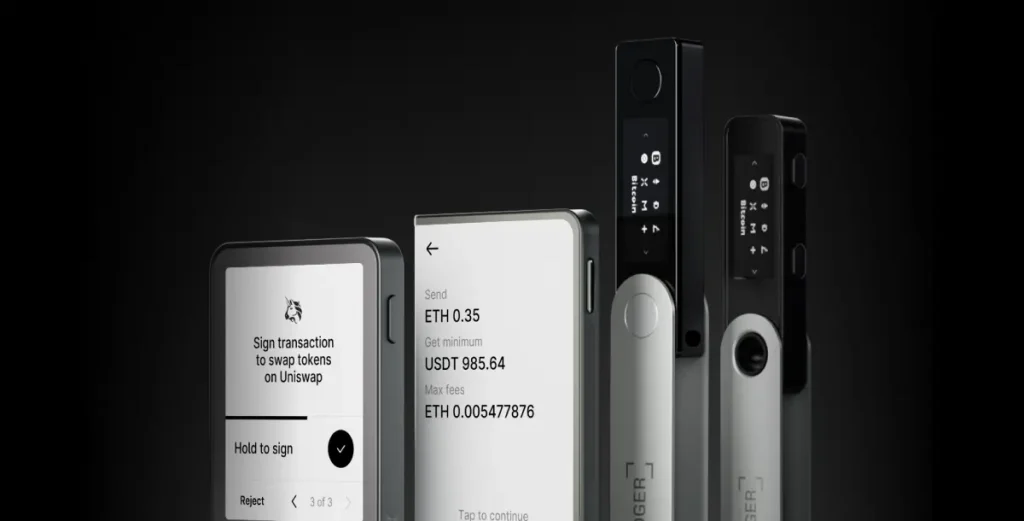
Ledger Nano X tends to win for one simple reason: it plays well with variety. Ledger’s ecosystem gives you broad asset coverage, and when you hit chain-specific quirks (common with altcoins), you can pair the device with third-party wallets to manage tokens, staking, and dApps more smoothly.
It uses a Secure Element and supports clear, device-based transaction confirmation you approve on the device, not on your computer or phone.
Why It Works for Altcoins
- Strong breadth across networks and tokens, which matters if your portfolio isn’t “one chain only.”
- Works with third-party wallets when a specific chain or dApp needs a specialized interface.
- Mobile-friendly setup via Bluetooth + USB-C, so you can keep your cold-signing flow even when you’re not at a desk.
Best For: multi-chain altcoin holders who want flexibility + mobile convenience
Best Security Transparency Pick: Trezor Safe 3 / Safe 5
Trezor appeals to users who care about transparency in how the wallet works, while still wanting modern protection in its Safe line. It also makes coin support easy to verify so you don’t buy first and troubleshoot later.
Why It Works for Altcoins
- Open-source leaning approach that many users prefer for auditability and community scrutiny.
- Clear supported-asset checks so you can confirm if your altcoins run natively in Trezor Suite or require a third-party wallet.
- Solid day-to-day UX for core assets and mainstream ecosystems, especially if you want a less patchwork feel.
Best For: users who value an open-source approach + mainstream coin support
Best Air-Gapped Workflow for DeFi Power Users: Keystone 3 Pro
If you live in DeFi, you already know the biggest risk isn’t just key theft—it’s signing something you didn’t fully understand. Keystone’s air-gapped workflow pushes you toward a more deliberate signing routine, which many DeFi users prefer.
Why It Works for Altcoins
- Air-gapped, QR-based signing reduces exposure to cable/wireless attack paths.
- Designed to work with major wallet apps, which matters when altcoin usability depends on the front end you choose.
- Strong fit for multi-ecosystem DeFi where you constantly connect, swap, stake, bridge, and approve.
Best For: DeFi-heavy users who want QR-based signing and broad wallet compatibility
Best Value for Lots of Chains on a Budget: SafePal S1
SafePal S1 suits people who want wide asset coverage without paying premium pricing. It leans heavily into a mobile-first flow, and it shines when you want a single app to handle a lot of the altcoin admin work.
Why It Works for Altcoins
- Big supported-asset catalog, which helps if you hold a mix of mainstream and mid-tail tokens.
- Mobile-first experience that keeps custody habits consistent (you still sign with the device).
- In-app access to swapping and dApps, useful for users who don’t want to juggle multiple front ends.
Best For: cost-conscious altcoin holders who still want broad chain coverage
Best Ultra-Portable “Tap-and-Go” Option: Tangem
Tangem targets the “I want self-custody without carrying a gadget” crowd. If you manage altcoins mostly from your phone and want minimal friction, its NFC-based approach delivers a fast routine without USB cables or batteries.
Why It Works for Altcoins
- NFC convenience makes it easy to keep custody habits consistent, especially for mobile users.
- Simple, portable form factor (card or ring options depending on model) that suits everyday use.
- Supports multi-network assets and NFTs across several ecosystems, which helps if your altcoin portfolio includes collectibles.
Best For: people who want simple, portable self-custody without a USB-device routine
Best for a Curated Set of Major Altcoins: BitBox02 Multi
BitBox02 Multi works best when you hold a “quality majors” portfolio and you care about a clean, security-first experience. It supports plenty of tokens, but it really shines when you keep your ecosystem list tight and want fewer moving parts.
Why It Works for Altcoins
- Strong fit for major ecosystems, where the device and companion app deliver a straightforward experience.
- Clean UX for long-term holding, especially if you mainly buy, hold, stake occasionally, and move funds infrequently.
- Pairs well with external wallets if you still need DeFi access without making DeFi your entire routine.
Best For: users with a focused portfolio who want a clean security-first experience
Bridging the Gap: From Personal Self-Custody to Enterprise Infrastructure
A personal hardware wallet gives individuals strong self-custody by keeping private keys offline and reducing exposure to malware, phishing, and exchange-side failures. That’s usually enough for one person managing one portfolio.
Businesses face a different level of risk. Once you manage customer funds, treasury assets, or an on-chain product, a single-device setup stops being enough. You need controls like policy enforcement, multi-party approvals, audit trails, role-based access, transaction limits, and clear hot/cold wallet separation. You also need resilience, so operations do not break if one person leaves, one device fails, or one credential is compromised.
If you are building an exchange, a wallet product, or an institutional treasury, you need an infrastructure that scales beyond retail limitations. ChainUp offers a secure, compliant digital asset solution powered by a non-custodial MPC model. Instead of juggling fragmented hardware keys, your team can manage assets through automated policy controls and structured governance workflows.
Stop stitching together multiple vendors. Talk to ChainUp today about deploying institutional-grade MPC and treasury controls designed for live production environments.