What is a Virtual Card?
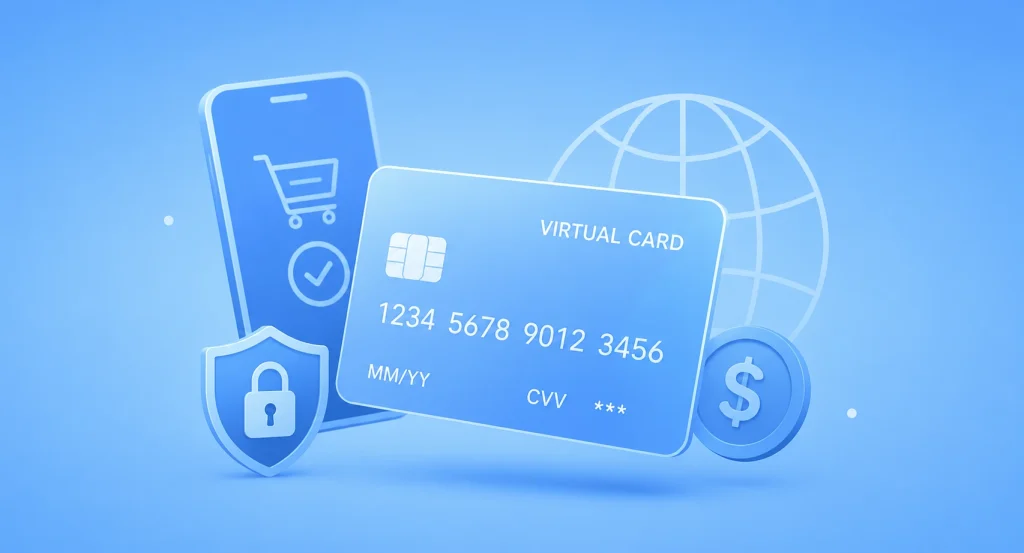
A virtual card is a digital payment card that provides a unique card number, expiration date, and security code (CVV) for making online or contactless purchases.
Unlike a physical card, it exists only in digital form and can be accessed through a banking app, payment platform, or card provider. Virtual cards offer the same functionality as traditional payment cards while adding extra security features, such as single-use numbers or spending limits, to help reduce fraud.
How do Virtual Cards work?
Virtual cards work by generating a unique digital card number, expiration date, and CVV that are linked to your underlying credit account, bank account, or prepaid balance. When you make a payment, the transaction is processed through the same payment networks as a physical card, while additional security features, such as single-use card numbers, spending limits, or merchant restrictions, help reduce the risk of fraud.
Common use cases of Virtual Cards
Virtual cards are widely used by individuals and businesses to make secure, convenient, and controlled digital payments. Here are some of the most common use cases:
1. Online Shopping
Virtual cards are ideal for e-commerce purchases because they keep your actual card details hidden. Some providers also offer single-use card numbers, reducing the risk of fraud if a merchant experiences a data breach.
2. Subscription Services
Many people use virtual cards for recurring payments such as streaming platforms, software subscriptions, cloud services, and gym memberships. Some virtual cards can be paused, deleted, or assigned spending limits, making it easier to manage subscriptions.
3. Business Expenses
Businesses issue virtual cards to employees for travel, office supplies, advertising, or software purchases. Administrators can set spending limits, restrict merchant categories, and track transactions in real time for better expense management.
4. Travel Bookings
Virtual cards can be used to book flights, hotels, car rentals, and other travel-related services online. They provide an extra layer of security when paying on travel websites or with international merchants.
5. Vendor and Supplier Payments
Companies often use virtual cards to pay vendors and suppliers securely. This simplifies accounts payable processes while improving payment tracking and reducing the risk of payment fraud.
6. One-Time or High-Risk Purchases
For purchases from unfamiliar websites or first-time merchants, a single-use virtual card helps protect your primary payment information. Even if the card details are compromised, they typically cannot be reused for unauthorized transactions.
7. International Online Payments
Many virtual cards can be used for cross-border online purchases wherever the card network (such as Visa or Mastercard) is accepted. This makes them a convenient option for paying overseas merchants, booking international services, or purchasing digital products from global platforms.
Note: The exact features and supported use cases depend on the virtual card provider. Some cards support only online transactions, while others can also be added to digital wallets for contactless payments in physical stores.
Types of Virtual Cards
The 6 most common types of virtual cards include:
By funding source: Credit, Debit, Prepaid
By usage: Single-use, Multi-use
By audience: Personal, Business
1. Virtual Credit Cards
Virtual credit cards are linked to a credit account, allowing users to make purchases on borrowed funds up to an approved credit limit. They often include fraud protection, rewards, and the ability to generate unique card numbers for safer online shopping.
2. Virtual Debit Cards
Virtual debit cards are connected directly to a bank account. Transactions are deducted immediately from the available balance, making them a popular choice for everyday online purchases and subscription payments.
3. Virtual Prepaid Cards
Virtual prepaid cards are loaded with a specific amount of money before use. Since spending is limited to the available balance, they are commonly used for budgeting, gifting, employee expenses, and reducing the risk of overspending.
4. Single-Use Virtual Cards
Single-use virtual cards generate a unique card number that can only be used for one transaction. They provide an extra layer of security by preventing the card details from being reused if a merchant experiences a data breach.
5. Multi-Use Virtual Cards
Multi-use virtual cards can be used for multiple transactions until they expire or are deactivated. They are ideal for recurring payments, software subscriptions, and regular business expenses.
6. Business Virtual Cards
Business virtual cards are designed for companies to manage employee spending, vendor payments, and procurement. They often include customizable spending limits, approval workflows, and detailed transaction reporting for better expense management.
Virtual Credit Cards vs. Virtual Debit Cards vs. Virtual Prepaid Cards: What's the Difference?
While all three types of virtual cards allow you to make secure online payments without a physical card, they differ in where the funds come from, how transactions are processed, and who they’re best suited for.
| Feature | Virtual Credit Card | Virtual Debit Card | Virtual Prepaid Card |
|---|---|---|---|
| Funding source | Credit line issued by a financial institution | Linked to a bank account | Preloaded with a fixed amount of money |
| How payments work | Borrow funds and repay later | Money is deducted immediately from your account | Spending is limited to the available balance |
| Spending limit | Based on your approved credit limit | Based on your bank account balance | Limited to the prepaid amount |
| Best for | Online shopping, travel, recurring payments, earning rewards | Everyday purchases and subscriptions | Budgeting, employee expenses, gifting, and controlled spending |
| Risk of overspending | Higher if balances aren’t managed | Low | Very low |
| Typical users | Individuals and businesses with access to credit | Consumers with bank accounts | Individuals and businesses needing spending control |
Which Virtual Card Is Right for You?
The best choice depends on your financial needs and spending habits:
- Choose a virtual credit card if you want rewards, greater purchasing power, and the flexibility to pay later.
- Choose a virtual debit card if you prefer spending directly from your bank account without taking on debt.
- Choose a virtual prepaid card if you want tighter budget control, safer online spending, or need to allocate funds for a specific purpose.
Although they work differently, all three provide the convenience and enhanced security of a virtual card by generating digital card credentials for online and contactless payments.
Virtual Cards vs. Digital Wallets vs. Physical Cards
What's the Difference?
Virtual cards, digital wallets, and physical cards all enable cashless payments, but they serve different purposes. A virtual card is a digital version of a payment card used for secure online and contactless transactions. A digital wallet stores your payment cards and other digital credentials in one app, while a physical card is the traditional plastic card used for in-store, online, and ATM transactions.
| Feature | Virtual Card | Digital Wallet | Physical Card |
|---|---|---|---|
| What it is | A digital payment card with its own card number, expiry date, and CVV | An app that stores payment cards and enables contactless payments | A plastic payment card issued by a bank or financial institution |
| Physical form | No | No | Yes |
| Can store multiple cards | No | Yes | No |
| Primary use | Secure online and digital payments | Managing and using multiple payment methods | In-store, online, and ATM transactions |
| Security | High, with features like single-use numbers and spending limits | High, using device authentication and tokenization | Standard card security features; higher risk if lost or stolen |
| Works without a smartphone | Usually no | No | Yes |
| Cash withdrawals | Usually not supported | Depends on the linked card and ATM support | Yes, if enabled by the issuer |
Virtual Cards:
Virtual cards are designed to provide a secure way to make online payments without exposing your physical card details. Many providers allow you to create unique card numbers, set spending limits, or generate single-use cards to reduce the risk of fraud.
Digital Wallets
A digital wallet is not a payment card, it is an application that stores your payment cards digitally. Instead of entering your card details each time, you simply add your credit, debit, or virtual cards to the wallet and use it to make online or contactless payments from your smartphone or smartwatch.
Physical Cards
Physical cards are traditional plastic credit, debit, or prepaid cards that can be used at point-of-sale terminals, ATMs, and online. While they remain widely accepted, they are more susceptible to loss, theft, and card-skimming than virtual cards.
Which One Should You Choose?
These payment methods often work together.
- Choose a virtual card if your priority is secure online shopping, subscriptions, or controlling spending.
- Choose a digital wallet if you want the convenience of storing multiple payment cards and making contactless payments from your mobile device.
- Choose a physical card if you frequently shop in stores, need to withdraw cash from ATMs, or require a payment method that works without a smartphone.
Key takeaway: A virtual card is a payment method, while a digital wallet is a storage and payment platform that can hold virtual cards, physical credit cards, and debit cards. In many cases, you can add a virtual card to a digital wallet and use it for contactless payments in physical stores.
Benefits of using Virtual Cards
Virtual cards have become increasingly popular because they combine the convenience of digital payments with enhanced security and spending control. Whether you’re an individual or a business, virtual cards offer several advantages over traditional payment methods.
1. Enhanced Security
Virtual cards have become increasingly popular because they combine the convenience of digital payments with enhanced security and spending control. Whether you’re an individual or a business, virtual cards offer several advantages over traditional payment methods.
2. Better Spending Control
You can often set transaction limits, expiration dates, or merchant restrictions for each virtual card. This makes it easier to manage budgets, prevent unauthorized purchases, and control employee spending.
3. Convenient Online Payments
Since virtual cards are available instantly after issuance, there’s no need to wait for a physical card to arrive. They’re ideal for online shopping, subscriptions, software purchases, and digital services.
4. Easier Expense Management
Businesses can create separate virtual cards for employees, departments, vendors, or projects. This simplifies expense tracking, accounting, and reconciliation by providing detailed transaction records for each card.
5. Reduced Risk of Card Fraud
If a virtual card is compromised, it can usually be frozen, replaced, or deleted without affecting your primary account. This minimizes the impact of data breaches and unauthorized transactions.
Virtual Cards for Businesses vs. Personal Use
Although the underlying technology is the same, virtual cards are designed to meet different needs for businesses and individual consumers.
| Feature | Business Virtual Cards | Personal Virtual Cards |
|---|---|---|
| Primary purpose | Expense management and business payments | Everyday online purchases and subscriptions |
| Typical users | Companies and employees | Individual consumers |
| Spending controls | Advanced controls, approval workflows, and spending limits | Basic spending limits and card management |
| Expense tracking | Detailed reporting and accounting integration | Personal transaction history |
| Common use cases | Vendor payments, employee expenses, travel, procurement | Online shopping, streaming services, travel bookings |
Business VCs:
Business virtual cards help organizations manage employee spending, pay suppliers, and streamline expense reporting. Many providers allow administrators to issue multiple virtual cards, set customized spending rules, and monitor transactions in real time.
Personal VCs:
Personal virtual cards are designed for secure everyday spending. They’re commonly used for online shopping, subscription services, travel bookings, and purchases from unfamiliar merchants, giving users greater privacy and control over their payments.
How to Choose the Right Virtual Card Provider
Not all virtual card providers offer the same features. Before choosing one, consider the following factors to ensure it meets your payment needs.
Security Features
Look for providers that offer fraud monitoring, tokenization, spending controls, card freezing, and the option to generate single-use or merchant-specific virtual cards.
Card Type
Choose a provider that offers the type of virtual card you need—whether it’s a credit, debit, or prepaid card—and supports your intended use cases.
Acceptance and Compatibility
Check whether the card is accepted by major payment networks such as Visa or Mastercard and whether it can be added to digital wallets for contactless payments.
Fees and Pricing
Review any issuance fees, monthly charges, foreign transaction fees, or currency conversion costs to understand the total cost of using the service.
Spending Controls and Management Tools
For businesses, features such as customizable spending limits, approval workflows, real-time reporting, and accounting integrations can significantly improve expense management.
Customer Support and Reliability
Choose a provider with responsive customer support, a reliable mobile app or web platform, and a strong reputation for security and uptime.
Tip: The best virtual card provider depends on how you plan to use the card. Individuals may prioritize convenience and security, while businesses often require advanced expense controls, reporting capabilities, and integrations with existing financial systems.
Are virtual cards safe to use?
Yes, virtual cards are generally considered safe because they reduce the need to share your actual card details during transactions. Many providers also offer additional security features such as single-use card numbers, spending limits, and the ability to freeze or delete cards instantly.
Virtual card in simple terms:
A virtual card is a digital version of a payment card that you can use for online or contactless purchases without needing a physical card. It includes a card number, expiration date, and CVV, just like a traditional credit or debit card.
Can virtual cards be used internationally?
Yes, many virtual cards can be used for international online purchases wherever the card network, such as Visa or Mastercard, is accepted. However, availability, supported countries, and foreign transaction fees vary depending on the card issuer.
Can I use a virtual card in physical stores?
Yes, if your virtual card can be added to a digital wallet such as Apple Pay or Google Wallet and the merchant accepts contactless payments. Otherwise, some virtual cards are intended for online purchases only.
Can I withdraw cash from a virtual card?
In most cases, virtual cards cannot be used to withdraw cash from ATMs. However, some issuers may allow cash withdrawals if the virtual card is linked to a debit account and supports ATM access through a digital wallet.
Do virtual cards expire?
In most cases, virtual cards cannot be used to withdraw cash from ATMs. However, some issuers may allow cash withdrawals if the virtual card is linked to a debit account and supports ATM access through a digital wallet.
Can I have multiple virtual cards?
Yes, many virtual card providers allow you to create multiple virtual cards under the same account. This is useful for separating spending across subscriptions, merchants, projects, or business expenses.
Are virtual cards free?
Some banks and financial institutions provide virtual cards at no additional cost, while others may charge issuance, monthly, or transaction fees. The pricing depends on the provider and the type of virtual card you choose.
Can virtual cards receive refunds?
Yes, refunds can usually be processed to the same virtual card used for the original purchase. Even if the card has been locked or replaced, many issuers can still route eligible refunds to your account.
Do virtual cards have CVV numbers?
Yes, virtual cards include a card number, expiration date, and CVV (Card Verification Value), just like physical payment cards. These details are used to verify your identity during online transactions.
Can virtual cards be added to digital wallets?
Yes, many virtual cards can be added to digital wallets such as Apple Pay, Google Wallet, or Samsung Wallet, provided the card issuer supports the service. This allows you to make contactless payments using your smartphone or smartwatch.