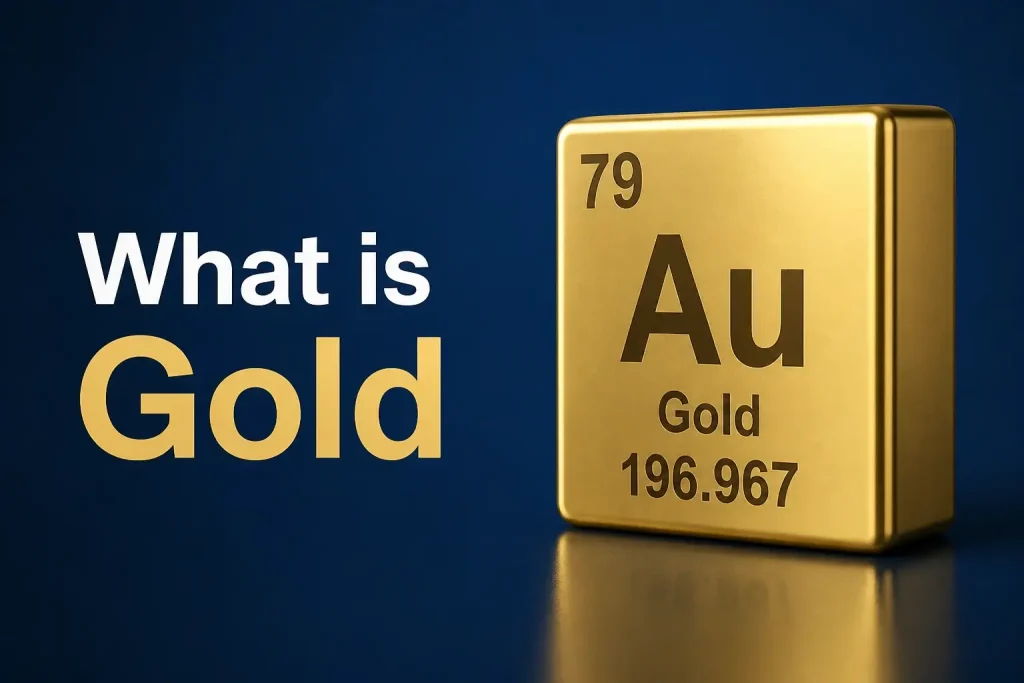
Gold (Au) is a naturally occurring precious metal known for its durability, rarity, and resistance to corrosion. It has been used for thousands of years as a store of value, currency, and symbol of wealth.
Today, gold is widely used both commercially and industrially—appearing in jewelry, coins, and investment products, as well as in electronics, medical devices, and aerospace components due to its excellent conductivity and reliability.
Understanding Gold (Au): Key Takeaways
In this article, we explore:
- Why humanity valued gold over the other 117 elements in the periodic table
- Key moments in global history, including the Bretton Woods Agreement and the Nixon Shock
- The scarcity of gold and why central banks are buying and holding it in 2026
- Gold tokenization and how platforms like ChainUp enable asset tokenization
- A quick FAQ about gold
Author Bio:

Chan Kang
Passionate About Blockchain, Technology, and the Global Economy
Why Humans Have Valued Gold for 5,000 Years
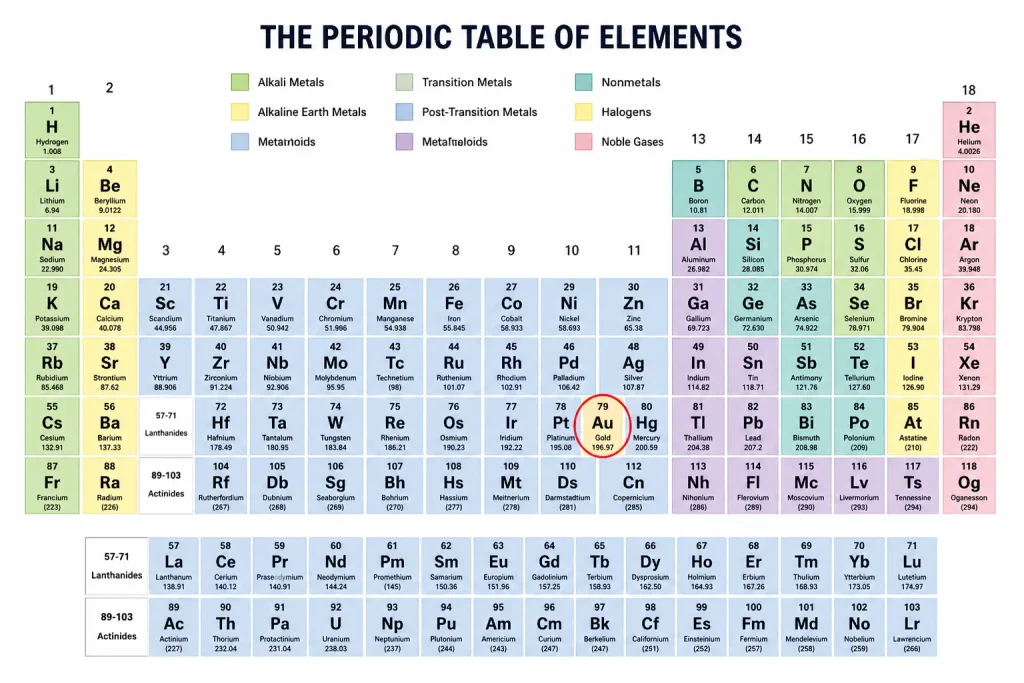
Humans have valued gold for over 5,000 years, choosing it over other elements in the periodic table—including metals like silver (Ag), copper (Cu), Iron (Fe), platinum (Pt), and palladium (Pd).
Across major civilizations such as the ancient Egyptians, Indians, Romans, Chinese dynasties, the Ottoman Empire, and the British Empire, gold consistently served as a store of value, a medium of exchange, and a symbol of wealth.
So, is it simply because gold is shiny? Not quite.
Gold has a unique combination of properties that make it exceptionally valuable:
1. Corrosion-resistant:
Gold does not rust or tarnish and does not react with air or water. A gold coin recovered from a centuries-old shipwreck can still look almost unchanged—unlike iron or copper, which would heavily corrode.
2. Malleable and divisible:
Gold is extremely easy to shape. One ounce can be hammered into a sheet as thin as paper, or melted and formed into coins, bars, and jewelry.
3. Scarce and limited:
Scarce and limited: Gold cannot be created, synthesized, or printed in any practical or economical way, and its natural supply is limited—making it inherently scarce.
Unlike diamonds, which can be lab-grown, gold cannot be economically produced.
🏛️ Global Historical Events Involving Gold
Bretton Woods Agreement (1944) 📜
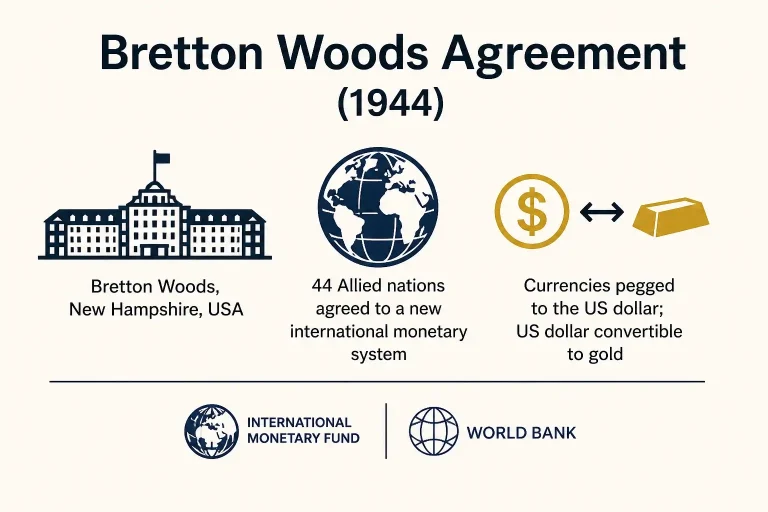
The 1944 Bretton Woods Agreement established the post-World War II international monetary system. Under this framework, 44 countries pegged their currencies to the U.S. dollar, while the U.S. dollar itself was convertible into gold at a fixed rate of $35 per ounce.
The system aimed to ensure exchange rate stability, prevent competitive devaluations (“beggar-thy-neighbor” policies), and promote global trade. It also led to the creation of key institutions like the International Monetary Fund (IMF) and the World Bank.
This gold-linked system ultimately collapsed in 1971 when the United States ended dollar-to-gold convertibility during the Nixon Shock 1971.
Key Features of the Bretton Woods System
- Fixed Exchange Rates
Currencies were pegged to the U.S. dollar and allowed to fluctuate only within a narrow band (±1%). - Gold Standard Backbone
The U.S. dollar was the only currency directly convertible into gold at a fixed rate of $35 per ounce, making it the global reserve currency. - The “Twin Institutions”
- The IMF oversaw exchange rate stability and provided short-term financial support
- The World Bank (IBRD) focused on reconstruction and development of war-affected economies
- Capital Controls
Governments often restricted capital flows to maintain economic stability and prevent financial crises.
Nixon Shock (End of the Gold Standard)
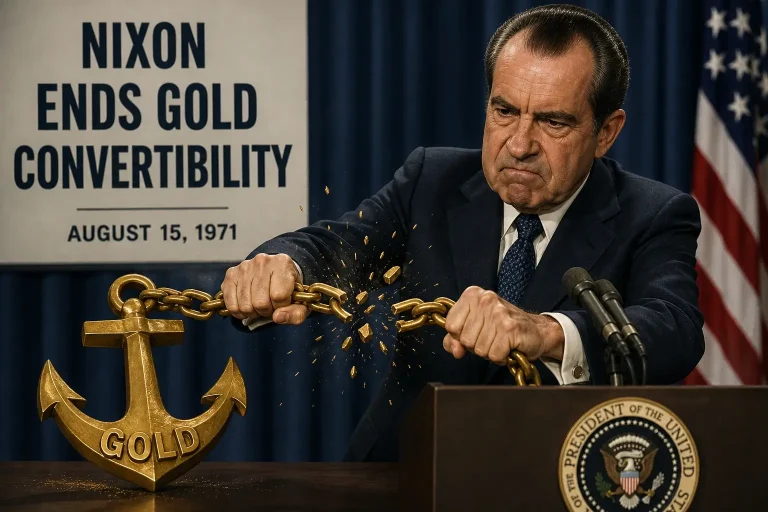
In 1971, U.S. President Richard Nixon announced a historic policy change that ended the convertibility of the U.S. dollar into gold. This event—known as the Nixon Shock—effectively dismantled the Bretton Woods system and marked the beginning of the modern fiat monetary era.
Before 1971, the U.S. dollar functioned like a “receipt” for gold, meaning foreign governments could exchange dollars for gold at a fixed rate of $35 per ounce. However, due to rising inflation, growing deficits, and excessive dollar issuance, the U.S. no longer had enough gold reserves to back all circulating dollars.
As a result, the link between gold and money was permanently severed.
Key Impacts of the Nixon Shock
- End of Gold-Backed Money
The direct link between gold and the U.S. dollar was cut, removing gold as the anchor of the global monetary system. - Birth of Fiat Currency
Modern currencies became fiat money—not backed by physical commodities, but by government authority and public trust. - From “Gold Receipt” to Trust-Based Money
The U.S. dollar transitioned from being redeemable for gold to a currency whose value depends on confidence in the government and economy. - Expansion of Money Supply
Without gold constraints, governments gained greater flexibility to print money, enabling economic stimulus—but also increasing the risk of inflation.
What Is Fiat Money? (Simple Explanation)
Fiat money is currency that has value because a government declares it legal tender and people trust it—not because it is backed by a physical asset like gold.
In simple terms: Fiat money works because people believe it works.
Why Do Central Banks Print Money—and How It Causes Inflation?
Central banks like the Federal Reserve expand the money supply to stabilize the economy during crises. This often happens during major events such as the Global Financial Crisis (e.g. collapse of Lehman Brothers), the COVID-19 pandemic, wars, or economic downturns.
In these situations, governments and central banks inject liquidity into the system through stimulus checks, bank bailouts, and monetary easing to prevent economic collapse.
How Money Printing Leads to Inflation
When new money is introduced into the economy, the total supply of money increases. Over time, this can reduce the purchasing power of existing money.
It’s similar to a company issuing a large number of new shares—each existing share becomes less valuable due to dilution.
Reference: Federal Reserve’ M2 supply
What Is Inflation (Simple Explanation)
Inflation is often described as rising prices—but more accurately:
Inflation reflects a decline in the purchasing power of money.
In other words, it’s not just that prices go up—it’s that your money buys less than before.
This is exactly why gold has remained relevant for over 5,000 years.
Unlike fiat currencies that can be expanded at will, gold’s supply is limited and cannot be printed or diluted—making it a reliable store of value in times of economic uncertainty.
Why Are Central Banks Buying Gold?
Central banks have been accumulating gold at a record pace, with major buyers including China, India, Brazil, Poland, Turkey, and Kazakhstan.
In 2025 alone, central banks purchased approximately 863 tons of gold, according to the World Gold Council, continuing a multi-year trend of rising demand.
So, what’s driving this surge?
1. De-dollarization Trends
Many countries are actively reducing their dependence on the U.S. dollar. As global reserve diversification accelerates, the share of dollar-denominated reserves has gradually declined.
Economic blocs like BRICS are also exploring alternative financial systems, reinforcing gold’s role as a neutral reserve asset that is not tied to any single country.
2. Protection Against Political and Sanctions Risk
Geopolitical tensions have made reserve assets more vulnerable to political influence. Following the Russian invasion of Ukraine, the United States froze a significant portion of Russia’s foreign reserves, many of which were held in U.S. dollars and U.S. government debt.
This event highlighted a key concern for many countries: “If it can happen to Russia, it can happen to us.”
In other words, reserves held within the global financial system may not be fully sovereign if they can be restricted or frozen during geopolitical conflicts.
Gold, by contrast, is considered a politically neutral reserve asset. It does not depend on another country’s monetary policies and cannot be frozen in the same way when held domestically.
3. Hedging Against Rising Debt Levels
With global debt levels continuing to rise, particularly in major economies, central banks are increasingly turning to gold as a hedge against long-term currency debasement.
For example, the U.S. national debt has surpassed $36 trillion, raising concerns about future monetary stability and potential inflationary pressures.
China increases Gold holdings as Dollar Reserve share declines
The People’s Bank of China has been on a multi-month gold buying spree, steadily increasing its gold reserves as reliance on U.S. dollar assets declines. Officially, around 10% of China’s reserves are now held in gold.
Part of China’s trade surplus with the United States has increasingly been redirected into gold bullion, which is stored domestically as a sovereign reserve asset.
Paper Gold vs Physical Gold: What’s the Difference?
Paper gold refers to financial products that track the price of gold without giving direct ownership of the physical metal. Examples include gold ETFs like SPDR Gold Shares and gold futures contracts. They are liquid and easy to trade, but investors are relying on financial institutions and contracts rather than holding the gold itself.
Physical gold, on the other hand, means direct ownership of actual gold bars or coins. This is the form of gold most central banks hold in their reserves, often stored domestically in secure vaults. Because you directly own the asset, physical gold carries lower counterparty risk.
In practice, paper gold and physical gold operate in closely connected, but fundamentally different markets.
Gold in the Digital Age: The Rise of Tokenization
Against this backdrop of rising inflation, geopolitical uncertainty, and growing demand from central banks, gold continues to prove its role as a trusted store of value. However, in a digital-first economy, traditional gold ownership faces limitations in accessibility, liquidity, and transferability.
This is where gold tokenization comes in—bridging the gap between a timeless asset and modern financial infrastructure. Platforms like ChainUp enable institutions to tokenize real-world assets such as gold, transforming them into digital tokens that are more accessible, divisible, and efficient to trade.
What Is Gold Tokenization? (Simple Explanation)
Gold tokenization is the process of converting physical gold into digital tokens on a blockchain. Each token represents ownership of a specific amount of real, securely stored gold (e.g., 1 token = 1 gram of gold).
This allows gold to be traded, transferred, and owned digitally—making it more accessible, divisible, and liquid compared to traditional physical gold.
ChainUp white label asset tokenization platform
Platforms like ChainUp’s white-label asset tokenization solution enable businesses to bring real-world assets like gold on-chain efficiently. By providing the infrastructure to issue, manage, and trade tokenized assets, ChainUp helps institutions launch compliant and scalable digital asset offerings without building everything from scratch.