Non-Custodial vs. MPC Wallets: The Next Generation of Digital Asset Custody

As blockchain technology and the digital asset market evolve, users are demanding higher levels of security and autonomy. In traditional finance, assets are typically held by banks or financial institutions. In the crypto space, however, users have the option to maintain full control over their assets. Non-custodial crypto wallets are rapidly becoming the gold standard […]
Cold Storage vs. Web3 Wallets: A Multi-Layered Strategy for Digital Assets

In cryptocurrency niche, one maxim reigns supreme: “Not your keys, not your coins.” This simple phrase captures the fundamental truth of digital asset management. Living by this truth requires two essential tools: the Cold Wallet, built for security, and the Web3 Wallet, built for connectivity. Think of a cold wallet as a high-security vault: physically […]
Gold vs. Bitcoin 2026: What Does Surging Gold Prices Mean for Crypto?

Is the “Digital Gold” narrative dead, or is it finally coming of age? As of late January 2026, a historic divide has opened in global markets. While Gold (XAU) has rocketed to a breathtaking $5,300 per ounce, shattering records daily, Bitcoin (BTC) is stuck in a consolidation phase near $88,000, roughly 30% below its October […]
The Liquidity Secret: How A-Book and B-Book Execution Models Dictate Your Trading Success
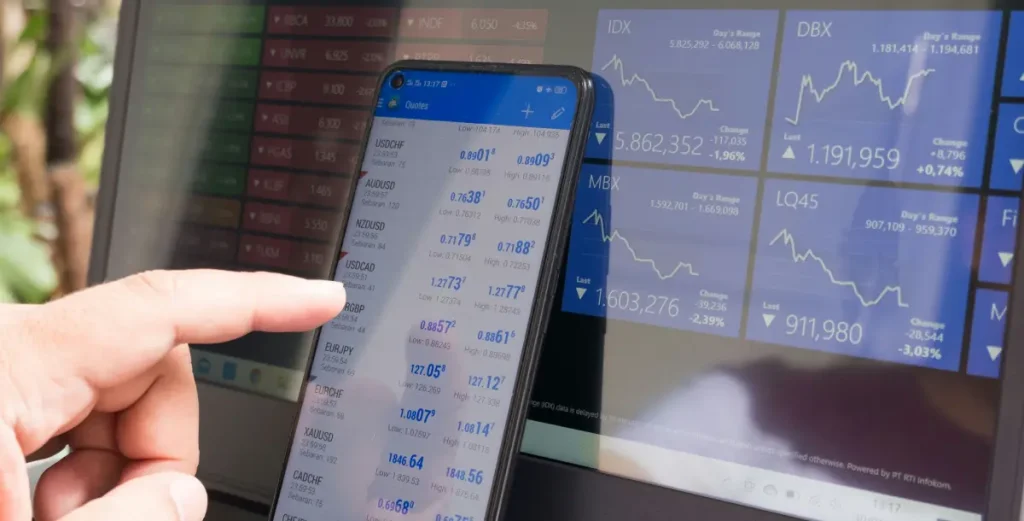
A-Book and B-Book brokers sit at the centre of every Forex and Contract For Difference (CFD) trade. These same execution dynamics show up in crypto markets, even if the labels look different. In crypto, you’ll hear “exchange,” “market maker,” or “order routing,” but the core question stays the same: does your venue route your order […]
Crypto Investing vs. Crypto Trading: Which One Is Right for You?

Are you a patient builder, planting seeds for the future? Or a sharp-eyed surfer, riding the waves of volatility? The crypto world offers life-changing opportunities, but crypto investing and trading are fundamentally different games. This guide explains how each approach works, the tools you’ll need, the risks to plan for, and a simple framework to […]
MPC Wallets vs Multi-Sig Wallets: Choosing the Right Key Model for Your Stack

Key Takeaways: Multi-Sig puts policy on-chain, so approval rules and signer activity are visible on the blockchain. That makes governance easier to verify and gives teams a native audit trail. MPC keeps policy off-chain while producing a standard on-chain signature. This preserves approval privacy, works across more chains, and usually lowers gas costs on EVM […]
Non-Custodial Wallet vs Custodial Wallet: What’s the Difference?

The biggest decision you make in crypto isn’t which coin to buy, it’s who actually holds the keys. Choosing between a non-custodial and a custodial wallet decides who signs every transaction, how you recover access when things go wrong, and how easily you plug into compliance and DeFi rails. This guide breaks down what each […]
Liquid Staking vs. Traditional Staking: Key Differences Explained

As Ethereum and other proof-of-stake (PoS) networks mature, staking has become a core part of institutional crypto strategy—enabling passive yield, network participation, and capital efficiency. You now have: Traditional staking: Lock tokens, secure the network, earn rewards—but lose liquidity. Liquid staking: Stake while keeping a tokenized receipt you can use in DeFi or trade freely. […]
What’s the Difference Between KYC and KYT in Crypto Compliance?

As the cryptocurrency market grows, regulatory compliance has become increasingly critical for both businesses and users. Two terms often encountered in the realm of crypto compliance are KYC (Know Your Customer) and KYT (Know Your Transaction). While both processes aim to enhance security and prevent illicit activity, they serve distinct functions. Understanding the difference between […]
Network Tokens vs. Company-Backed Tokens: A Defining Distinction in Digital Assets

The rapid expansion of digital assets has created new opportunities—and new regulatory challenges—for businesses, investors, and developers in Web3. At the core of this evolving landscape is a fundamental distinction: network tokens vs. company-backed tokens. Understanding this difference is not just theoretical—it determines how tokens are classified, how they function in the market, and how […]