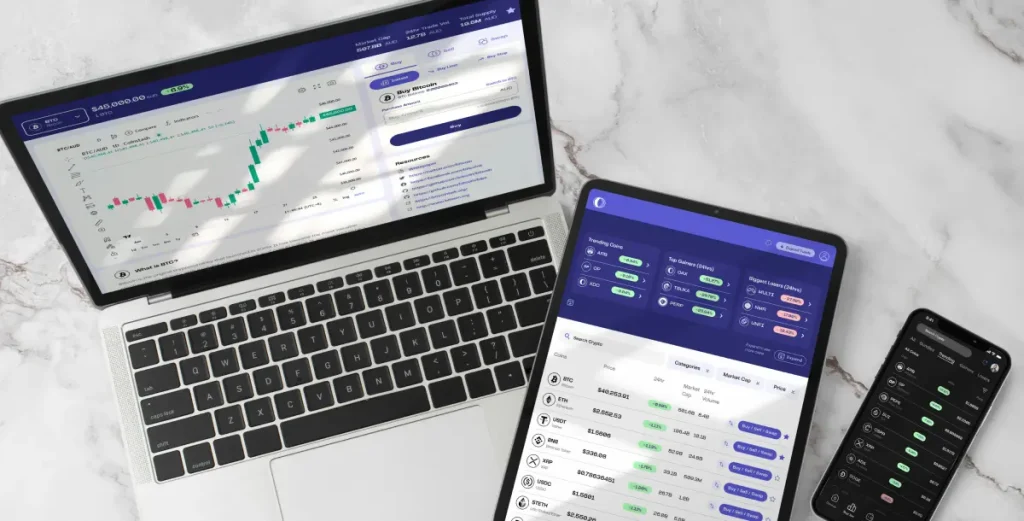
For cryptocurrency exchange operators, top-level metrics like Daily Active Users (DAU) and gross trading volumes can be misleading. While these figures may suggest a stable growth trajectory, the Exchange Operator’s Intelligence Report 2026 reveals a structural erosion occurring beneath the surface.
The data confirms a critical trend: 60% of active traders have migrated their primary activity to a competitor over the last 24 months.
This migration rate suggests that gross trading volume is no longer a reliable proxy for platform health. Instead, many exchanges are witnessing a high-velocity “churn” of capital. For founders and executive teams, this volatility represents a significant unpriced risk to platform valuation. In an environment of absolute capital fluidity, traditional growth metrics offer a false sense of security, masking a fundamental lack of operational defensibility.
The Collapse of Brand Loyalty
Many platform operators still believe that a recognizable brand name or aggressive marketing will anchor users to their exchange. The data reveals a completely different story. Users view exchanges as utility-based gateways for execution, not hubs for research or community building.
The report confirms that 99% of traders will switch platforms for any reason.
Traders are utility-driven. Their loyalty is tied entirely to how a platform functions during peak market movements, not brand affinity. If a competitor offers a marginal improvement in fee structures, token availability, or matching engine latency, capital reallocates instantly.
This total absence of brand loyalty is however a strategic opportunity. An operator does not need a decade of brand heritage to win market share; they simply need to identify and solve the specific functional triggers that drive capital movement.
Technical Stability as the Baseline Requirement
It is a common strategic error to categorize platform stability as a competitive advantage. Uptime, security, and execution speed are critical, but they have transitioned into baseline requirements.
Traders do not reward a platform for reliability; they expect it as a prerequisite for entry. These are the table stakes for operating in the digital asset space in 2026. When a platform falls short of these baseline expectations, the exit is immediate. However, when it meets them, it is merely at par with the rest of the market.
The question for leadership is no longer about maintaining uptime, but identifying the hidden differentiators that insulate a platform against capital migration.
The High Cost of Operational Friction
The report identifies a direct link between operational friction and the de-prioritization of a venue. This friction rarely results in a loud exit through immediate account closure. Instead, it triggers a shift in capital velocity.
When capital is this fluid, a user may remain “active” on a dashboard while their primary trading volume has already migrated to a more efficient environment. This creates a deceptive stability in Daily Active User (DAU) counts that fails to account for the actual reallocation of liquidity.
By the time an operator detects a definitive drop in 24-hour volume, the value erosion has typically been underway for months. Most platforms are currently unable to quantify the specific “value killers” within their own infrastructure that trigger this migration, yet identifying these triggers is the only way to move from a reactive to a defensive stance.
Identifying the Controllable Differentiators
If brand loyalty is non-existent and technical stability is commoditized, the focus for leadership must shift to the internal variables that actually dictate capital retention. The 2026 Exchange Intelligence Report identifies several “controllable” differentiators—operational touchpoints that most executive teams currently treat as passive overhead rather than active drivers of liquidity.
The Service-Retention Link
The data reveals a stark disconnect in how different user segments react to operational friction. While a support desk is often viewed as a cost center, the report identifies a direct correlation between customer support quality and platform abandonment. Certain high-activity segments are twice as likely to abandon an exchange due to service friction, yet the specific Response-to-Retention thresholds required to stop this capital exit remain a blind spot for most operators.
The Strategic Gap
In addition, the report highlights a significant “Strategic Gap” in current market offerings. While a large portion of traders cite interface quality as a decisive factor in venue selection, only 12% are satisfied with their current provider.
This represents a massive, underserved segment of the market. To lead in 2026, operators must move beyond treating these as “soft” metrics and start leveraging them as controllable growth levers.
Ready to Close the Gaps?
The challenge for exchange operators has moved from simple user acquisition to lifecycle ownership. The Exchange Operator’s Intelligence Report 2026 provides the strategic blueprint to move your platform from “technically sound” to “user-essential.”
Download the full report today to access:
- The Satisfaction Gap Map: Identify the specific friction points where legacy systems fail today’s sophisticated, highly mobile user base.
- The Interface Frontier: Discover how professional-grade UI density serves as the primary anchor for retaining high-volume traders.
- Strategic Prioritization: Eliminate guesswork by identifying which features—from liquidity access to execution speed—actually drive market share.
- The Lifecycle Ownership Blueprint: A roadmap to building an ecosystem that ensures your users never outgrow your platform.
Secure your revenue engine and eliminate the guesswork from your product roadmap for 2026 and beyond.