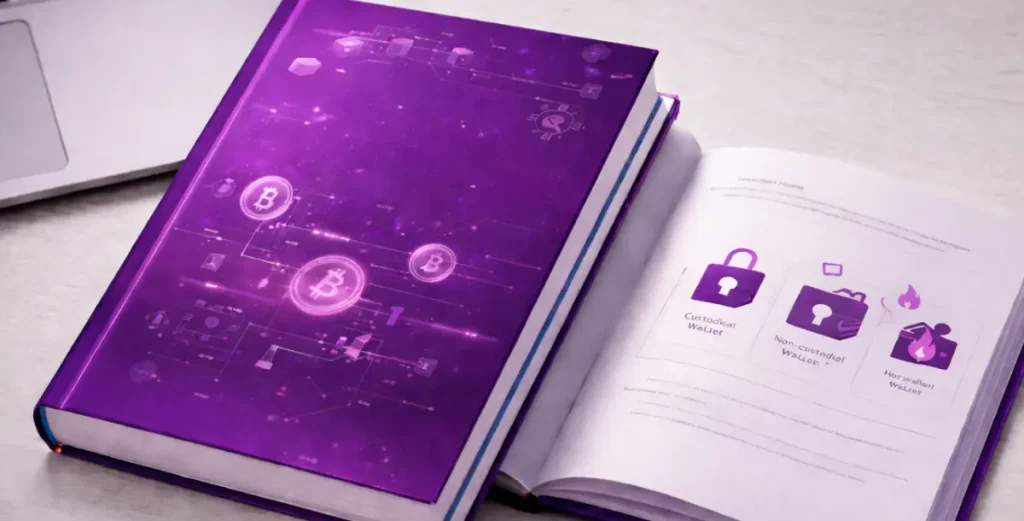
As blockchain technology advances, managing digital assets has become a critical priority for both individual investors and institutions. Within this ecosystem, Custodial Wallets, Non-Custodial Crypto Wallets, and Hot Wallets represent the three fundamental pillars of storage.
Understanding the differences, use cases, and security profiles of these wallet types is essential for building a robust asset management framework. This article provides an in-depth analysis of these three categories, covering technical architecture, security strategies, risk management, and future trends.
1. Understanding Custodial Wallets
A Custodial Wallet is a digital wallet where a third-party platform or institution manages the private keys and assets on behalf of the user. Users typically interact with an account login, while the platform handles the underlying cryptographic complexities.
Key Characteristics
- Third-Party Key Management: Users do not have direct control over private keys; the platform acts as the custodian.
- User-Friendly Operations: Deposits, transfers, and trades are performed through a simplified platform interface.
- Recovery Mechanisms: If a user loses their login credentials, the platform can provide account recovery or password reset services.
- High Compliance: These wallets usually integrate KYC (Know Your Customer) and AML (Anti-Money Laundering) policies to meet regulatory standards.
Common Use Cases
- Exchange-hosted accounts (CEXs).
- Custodial investment services.
- Institutional asset management (in specific scenarios).
While convenient, the primary drawback is limited autonomy. If the platform suffers a security breach, the user’s assets may be at risk.
2. Understanding Non-Custodial Crypto Wallets
A Non-Custodial Crypto Wallet (or self-custody wallet) is a type of wallet where the user is solely responsible for managing their private keys. In this model, the user has absolute control over their assets without relying on a third party.
Key Characteristics
- Absolute Key Control: Generation, storage, and usage of private keys are entirely managed by the user.
- Sovereignty: No centralized entity can freeze or move the assets.
- Decentralized Principles: This model embodies the core “trustless” ethos of blockchain technology.
- Individual Responsibility: If private keys or seed phrases are lost or stolen, assets cannot be recovered.
Common Use Cases
- On-chain Decentralized Finance (DeFi) operations.
- NFT (Non-Fungible Token) management.
- Long-term asset holding (“HODLing”).
- Participating in on-chain governance.
3. Understanding Hot Wallets
A Hot Wallet refers to any wallet that is connected to the internet. These are designed for frequent trading and high-velocity asset movement. A hot wallet can be either custodial (like an exchange account) or non-custodial (like a mobile browser wallet).
Key Characteristics
- Online Connectivity: Constantly connected to the blockchain network for real-time transactions.
- High Convenience: Ideal for daily transactions and short-term asset operations.
- Higher Security Risk: Being “always-on” makes them more susceptible to malware and phishing attacks.
- Hybrid Potential: Often used in tandem with cold (offline) wallets to separate liquid funds from reserves.
Common Use Cases
- Managing daily liquidity for exchanges.
- Interacting with Decentralized Applications (dApps).
- High-frequency trading.
4. Comparative Analysis: At a Glance
| Feature | Custodial Wallet | Non-Custodial Wallet | Hot Wallet |
| Private Key Control | Platform | User | User or Platform |
| Asset Sovereignty | Relatively Weak | Absolute | Partial/Liquid Assets |
| Convenience | High | Medium | High |
| Security Risk | Platform failure/breach | User error/Key loss | Online attacks/Hacking |
| Primary Use Case | Trading & Custody | On-chain ops & Holding | High-frequency trading |
5. Technical Architecture and Security Strategies
Custodial Wallet Security
The security of a custodial wallet relies on the platform’s internal controls, including:
- HSM (Hardware Security Modules): To store and manage keys.
- Multi-Level Permissions: Requiring multiple approvals for large withdrawals.
- Cold/Hot Separation: Keeping the majority of assets offline.
- Disaster Recovery: Redundant storage across multiple geographical locations.
Non-Custodial Wallet Security
These wallets focus on local security on the user’s side:
- Key Generation: Using localized random algorithms.
- Mnemonic Backup: Generating 12 or 24-word seed phrases.
- Offline Signing: Transactions are signed locally before being broadcast to the network.
- Advanced Tech: Integration with Multi-Sig or Threshold Signature Schemes (TSS).
Hot Wallet Management
To mitigate the risks of being online, hot wallets require:
- Tiered Funding: Only keeping necessary amounts online.
- MFA (Multi-Factor Authentication): For all access points.
- Real-time Monitoring: Alerts for suspicious transaction patterns.
6. Strategic Combinations for Users
In practice, the most effective digital asset management involves a hybrid approach:
- For Individuals: Use a Non-Custodial Cold Wallet for long-term savings and a Hot Wallet for daily trading.
- For Institutions: Keep the bulk of assets in Custodial Cold Storage while using Hot Wallets for operational liquidity, managed via Multi-Sig protocols.
7. Future Trends in Wallet Technology
- Convergence of Models: Institutions may offer hybrid custody where users retain partial control of keys.
- MPC and TSS Expansion: Multi-Party Computation will become the standard to eliminate single points of failure.
- Account Abstraction (AA): Enhancing user experience by allowing social recovery and programmable security.
- Wallet as Identity: Wallets will evolve into gateways for decentralized identity (DID) and data management.
Conclusion
Custodial, Non-Custodial, and Hot Wallets each serve unique roles in the digital economy. The ultimate goal is to find the right balance between security, convenience, and autonomy.
- Custodial Wallets offer convenience and regulatory compliance.
- Non-Custodial Wallets empower users with asset sovereignty.
- Hot Wallets provide the liquidity necessary for a functional market.
By implementing scientific combination strategies and maintaining high security awareness, users can safely navigate and profit from the evolving blockchain landscape.