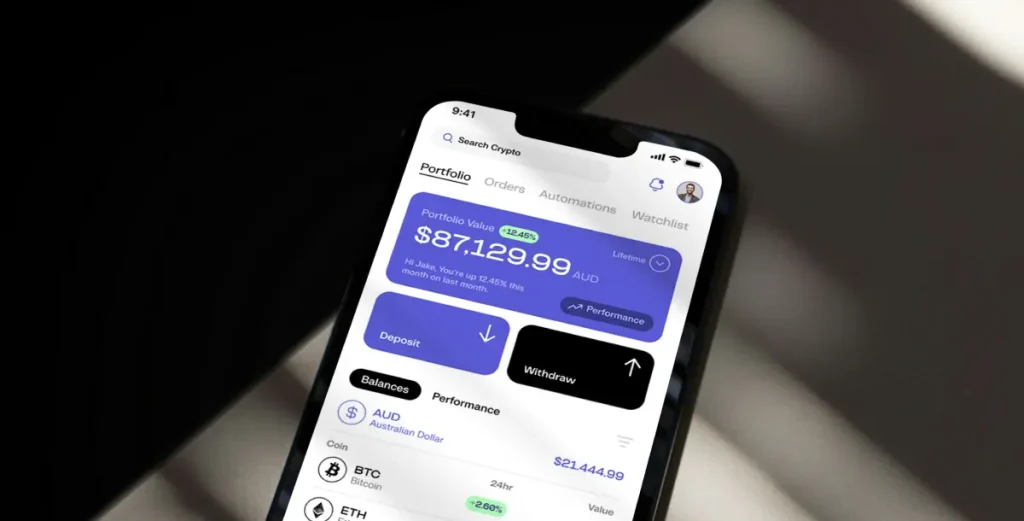
Most crypto teams still rely on outdated wallets with high risks; one password, one key, and no safeguards. A lost seed phrase or compromised key can mean total asset loss. Smart Contract Wallets solve this by offering programmable, policy-driven functionality designed for secure, efficient business workflows. Built on account abstraction (ERC-4337) on networks like Ethereum, they enhance security, streamline operations, and improve user experience. This guide breaks down how they work and why your organization needs them.
What Is a Smart Contract Wallet?
In simple terms, a smart contract wallet is a crypto wallet where the operational “rules” are encoded directly into a smart contract on the blockchain, rather than being controlled by a single private key. It functions as a decentralized application (DApp) that can store, send, and manage digital assets while also executing predefined logic—such as spending limits, multi-user approvals, and automated transfers.
This programmability is supercharged by account abstraction (ERC-4337), a standard that allows smart contracts on networks like Ethereum to act and feel like user-owned accounts. Instead of just being passive code, the wallet itself can initiate transactions, pay for gas fees, and enforce complex security policies. Leading examples include smart contract wallets like Safe (formerly Gnosis Safe), Argent, and ZeroDev-powered AA wallets, which already demonstrate how programmable accounts can streamline user onboarding and enterprise-grade workflows.
Smart Contract Wallet vs. Traditional Crypto Wallet
The differences between a traditional Externally Owned Account (EOA) and a Smart Contract Wallet (SCW) are fundamental, impacting everything from security to user experience.
Traditional Wallets (EOAs) in 30 Seconds
A traditional crypto wallet, or EOA, is controlled by a single private key. This is the model used by common wallets like MetaMask and most hardware wallets. The security of the entire wallet rests on the secrecy of this key and its backup, the seed phrase.
This simple approach has significant limitations:
- Single Point of Failure: If you lose the private key or seed phrase, you lose permanent access to your funds.
- No Native Controls: There are no built-in mechanisms for multi-user approvals, spending policies, or automated workflows.
- Full Access if Compromised: An attacker who gains access to the private key has complete and unrestricted control over all assets in the wallet.
How Smart Contract Wallets Are Different
Smart contract wallets address these limitations by embedding rules directly on-chain. This table outlines the key differences between traditional Externally Owned Account (EOA) wallets and modern smart contract wallets, focusing on their features, functionality, and business impact.
| Feature Area | Traditional Wallet (EOA) | Smart Contract Wallet (SCW) | Business Impact of SCW |
| Control & Access | Single Point of Control: Managed by a single private key. Whoever holds the key has absolute control over the funds. | Programmable & Shared Control: Rules are defined in code. Supports multi-signature (multi-sig) approvals, role-based permissions, and custom policies. | Enhanced Operational Security: Businesses can eliminate single points of failure. Requiring multiple approvals for large transactions significantly reduces the risk of internal fraud or external hacks. |
| Security | High Risk: If the private key is lost, stolen, or compromised, all assets are permanently vulnerable and can be drained instantly. | Multi-Layered & Proactive Security: Enables features like daily transaction limits, address whitelisting (only allowing sends to approved addresses), and time-locks on transactions. | Reduced Financial & Reputational Risk: Provides institutional-grade security for managing corporate treasuries. Proactive security rules protect company assets, safeguarding capital and maintaining stakeholder trust. |
| User Experience | Complex for New Users: Requires users to manage and securely store a seed phrase. They must also hold the blockchain’s native token (e.g., ETH) to pay for all transaction fees (gas). | Simplified & Frictionless: Enables gas abstraction. Businesses can sponsor transaction fees for their users, or allow fees to be paid in common tokens like stablecoins, creating a seamless experience. | Increased Customer Adoption & Engagement: By removing major onboarding hurdles like gas fees and complex key management, businesses can attract a wider user base and improve the overall usability of their web3 applications. |
| Recovery | Unforgiving: Recovery is entirely dependent on the seed phrase. If the seed phrase is lost, access to the wallet and all its assets is permanently lost. | Flexible & Resilient Recovery: Supports social recovery, where a group of trusted individuals or devices can help restore access. Also allows for other custom, policy-based recovery mechanisms. | Improved Business Continuity: Drastically reduces the risk of losing access to critical company funds. A lost key no longer means a catastrophic loss, ensuring the organization can recover and continue operations. |
| Functionality | Limited to Basic Transactions: Primarily designed for sending, receiving, and storing tokens. Lacks advanced, built-in logic. | Highly Functional & Automated: Can bundle multiple transactions into a single action (atomic transactions). Wallets can be programmed to interact with other protocols automatically. | Greater Efficiency & Scalability: Automates complex financial workflows, reducing manual effort and potential for human error. Enables more sophisticated treasury management and DeFi strategies, allowing businesses to operate efficiently at scale. |
The Business Case for Smart Contract Wallets
Smart contract wallets enable institutions to manage digital assets with greater programmability, automation, and security. They fundamentally transform the user experience by embedding custom logic directly into the wallet itself, moving beyond the limitations of traditional key-based accounts.
1. Frictionless Onboarding That Removes User Barriers
Conventional wallets force users to handle seed phrases and technical setup, creating unnecessary complexity. Smart contract wallets offer familiar login flows: email, passkeys, and biometrics that feel natural to everyday users. This smooth entry point makes it easier for users to get started and interact confidently from day one.
2. Embedded Security Rules That Strengthen Platform Trust
Smart contract wallets enable programmable controls such as multi-signature approvals, role-based permissions, spending limits, and whitelisted addresses. These built-in safeguards create a more secure environment, reassuring users that protections are consistently enforced without relying on manual oversight.
3. Automated Processes That Reduce Manual Workload
Automation is a core advantage. Smart contract wallets can sponsor gas fees, batch approvals, initiate recurring transactions, or rebalance treasury movements—all without constant operator involvement. This shifts routine tasks away from manual intervention and helps teams focus on higher-value work.
4. Flexible Architecture for Tailored User Experiences
Institutions can design wallet behaviors that match the needs of different audiences. Whether it’s time-locked withdrawals, custom recovery flows, or distinct spending profiles, smart contract wallets give teams the freedom to build experiences that feel personalized and intuitive for specific user groups.
This entire process is facilitated by the account abstraction model, where user actions (User Operations) are bundled and processed through a universal EntryPoint contract on the blockchain.
Take the Next Step with Smart Contract Wallets
Smart contract wallets are no longer experimental. They have become the new baseline for secure and programmable Web3 infrastructure. They remove seed phrases, automate key workflows, and give institutions security rules that cannot be bypassed. Modern tools also make it easy to adopt, allowing teams to launch programmable wallets in hours instead of months.
In fact, they are already being used across the industry:
- Exchanges use them to automate withdrawals.
- Fintech apps use them to deliver a mainstream-ready onboarding experience.
- DAOs and funds use them to establish real governance.
- Enterprise payment platforms use them to manage recurring transactions with built-in controls.
As account abstraction rolls out across Ethereum and major Layer 2s, smart contract wallets are quickly becoming the upgrade institutions are choosing to modernize their wallet architecture.
To support this transition, institutions need more than a wallet; they need the infrastructure around it. ChainUp provides the systems that make programmable custody operational: exchange-grade trading infrastructure, custody orchestration for multi-chain assets, compliance and risk engines, and secure transaction governance frameworks. Together, these components give teams the backbone required to deploy smart contract wallets at scale and turn programmable features into reliable, production-ready workflows.