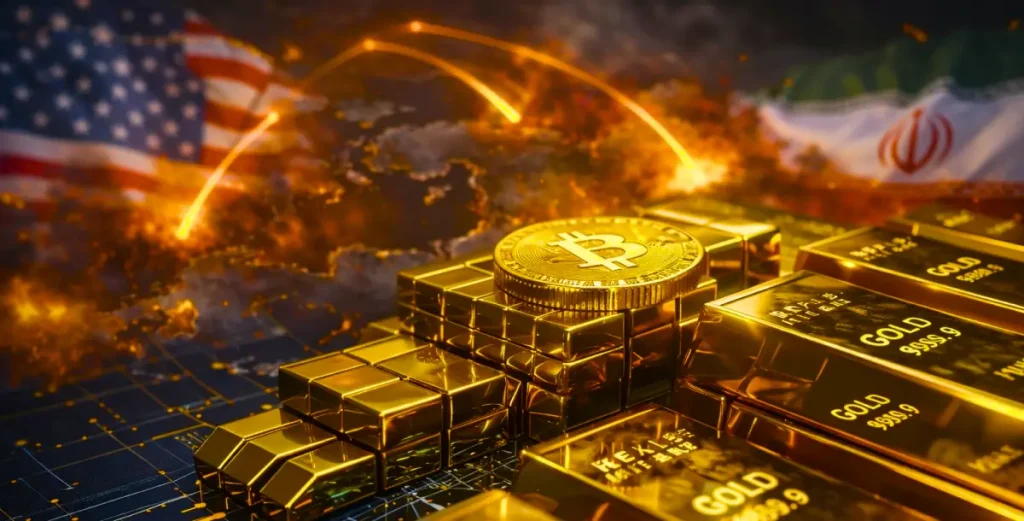
Oil tokenization is emerging as a critical new financial layer for commodities, offering a more resilient alternative to traditional trading systems in global oil markets. These markets remain highly vulnerable to unpredictable geopolitical shocks, while legacy trading infrastructure relies on slow, capital-intensive systems that struggle to adapt when conflicts disrupt supply chains.
As energy assets face mounting pressure from regional disputes and shipping bottlenecks, the need for tokenization is already substantiated. The real-world asset tokenization market reached over $24 billion in early 2026, with commodity tokenization alone growing four times year-over-year. Investors and institutions are increasingly moving beyond legacy paper contracts to embrace these digital solutions.
Tokenization fundamentally restructures how energy assets are traded, owned, and financed on a global scale. By transitioning physical reserves into programmable digital assets, the energy sector is solving historic inefficiencies and creating entirely new avenues for capital formation.
The State of the Global Oil Market in 2026
To understand the rise of blockchain in oil and gas, we must examine the macroeconomic pressures defining the current market.
As of March 23, 2026, the global energy landscape has been upended by the onset of military action in the Middle East. Brent crude has surged past $113 per barrel, with WTI hovering near $100, marking a nearly 50% increase since the start of the year.
This rapid price appreciation is driven primarily by the de facto closure of the Strait of Hormuz, which has triggered the largest supply disruption in modern history, halting roughly 20% of the world’s petroleum liquids.
While 2026 initially projected a supply surplus, the current “war premium” has shifted the market into a critical deficit, forcing a pivot toward digital efficiency tools as a means to manage extreme price volatility and counterparty risk.
What Oil Tokenization Actually Means
Tokenization of real world assets involves converting a physical asset into blockchain-based digital tokens. In the energy sector, one token can represent a single barrel of oil or a specific fraction of a verified reserve. These tokens are backed by audited physical assets and traded on secure blockchain marketplaces.
The Tokenization Process
Bringing oil reserves on-chain requires a meticulous, multi-step process:
- Asset verification: Independent auditors confirm the existence and quality of the physical oil reserves.
- Reserve custody: The physical commodity is secured in monitored storage facilities.
- Token minting: Smart contracts generate digital tokens corresponding to the verified assets.
- Blockchain trading: Tokens are bought and sold on digital asset exchanges.
- Redemption or settlement: Token holders can either trade their digital assets for stablecoins or redeem them for physical delivery, depending on the platform’s regulatory framework.
Several active projects demonstrate this model in action. The OIL1 stablecoin operates as an oil-backed token, while enterprise initiatives like the Chevron Energy Token are pioneering institutional blockchain integration.
Use Case: The OIL1 Stablecoin and the Future of Energy Settlement
The OIL1 stablecoin serves as a premier example of how the “digital twin” model is evolving into a functional pillar of global trade. Launched at the World Economic Forum 2026 in Davos by the Gulf Energy Exchange (GEX), OIL1 is more than just a digital representation of a commodity—it is a purpose-built settlement instrument for the $2.4 trillion global oil market.
The Dual-Peg Innovation
Unlike first-generation commodity tokens that simply tracked price, OIL1 utilizes a unique dual-peg structure:
- Commodity Link: Each token is collateralized 1:1 by verified reserves of Gulf crude oil.
- Value Stability: It is simultaneously pegged to the U.S. Dollar, supported by a diversified reserve basket that includes institutional stablecoins like USDC and USD1.
This hybrid approach allows OIL1 to function as a reliable medium of exchange that bridges the gap between traditional energy markets and the 24/7 digital asset economy.
Why Tokenization Is Reshaping the Energy Market
The transition from physical barrels to digital tokens fundamentally alters the economics of energy trading through three core pillars.
Fractional Ownership & Democratization
Traditional oil investments demand millions of dollars in upfront capital, limiting participation to large institutions. Tokenization lowers these barriers drastically.
Platforms now allow investors to buy fractional exposure to oil reserves, royalty streams, or storage receipts with entry points as low as $50 to $100. This democratization unlocks vast pools of global retail capital previously excluded from energy commodities.
Programmable Cash Flow and Energy Royalties
Tokenized royalties represent one of the most significant innovations of 2026. Traditional revenue distribution involves complex accounting, delayed payments, and high administrative costs.
Smart contracts automate this entirely. Revenue generated from a specific well is automatically distributed to token holders via stablecoin payouts. This programmable cash flow ensures transparent revenue accounting and drastically reduces overhead.
24/7 Liquidity and Global Trading
Traditional oil markets are hampered by limited exchange hours, delayed settlements (T+2 or T+3), and heavy reliance on intermediaries. Tokenized oil trading directly addresses these inefficiencies.
By leveraging blockchain, it enables 24/7 market access, instant settlements, and global participation at any time. This efficiency has driven daily trading volumes for leading oil tokens to exceed $27 million in early 2026.
Benefits of Oil Tokenization for the Global Energy Market
The structural advantages of bringing commodities on-chain are comprehensive:
- Liquidity: Tokenization unlocks idle capital previously tied up in physical reserves or stranded in slow-moving transit.
- Transparency: Blockchain ledgers provide verifiable proof of reserves, mitigating fraud and counterparty risk.
- Efficiency: Instant atomic settlement eliminates the capital requirements of T+2 or T+3 delays.
- Accessibility: Both retail and institutional investors gain direct, frictionless exposure to top-tier energy assets.
The Future of Tokenized Energy Markets
The trajectory for blockchain in the energy sector is sharply upward. Industry projections estimate the blockchain energy market will reach $5 billion by the end of 2026, driven by a projected 44% compound annual growth rate (CAGR) through 2035. As part of this broader macro trend, total RWA tokenization is expected to exceed $100 billion in total value locked (TVL) shortly.
If tokenization is widely adopted, the energy market will undergo transformative changes. Trading will become more efficient with 24/7 access and instant settlements, reducing reliance on intermediaries and cutting operational costs. Tokenized assets will unlock new liquidity streams, enabling smaller investors to participate in traditionally capital-intensive markets.
Additionally, innovations like fully tokenized oil ETFs, DeFi lending protocols backed by verified energy assets, and on-chain commodity derivatives will create a more transparent, accessible, and resilient energy trading ecosystem.
Digitizing real-world commodities is a long-term structural evolution. As the technology matures and regulatory frameworks solidify, organizations that adopt tokenization infrastructure today will dictate the efficiency and resilience of the global energy supply chain tomorrow.
The Role of RWA Tokenization Platforms
Technology providers form the backbone of this market transformation. Institutions rely on advanced infrastructure to bridge the physical oil markets with digital asset ecosystems securely and compliantly.
Platforms like ChainUp supply the critical technology required for this transition. ChainUp’s tokenization platform provides the underlying exchange architecture, mint factory, and links to broader market networks, enabling seamless, high-performance trading environments for tokenized assets without acting as direct liquidity providers or consumer wallet custodians.
Explore more by contacting ChainUp to learn how advanced tokenization infrastructure is enabling real-world assets to move on-chain, and discover the strategic advantages of digitizing institutional commodities.