
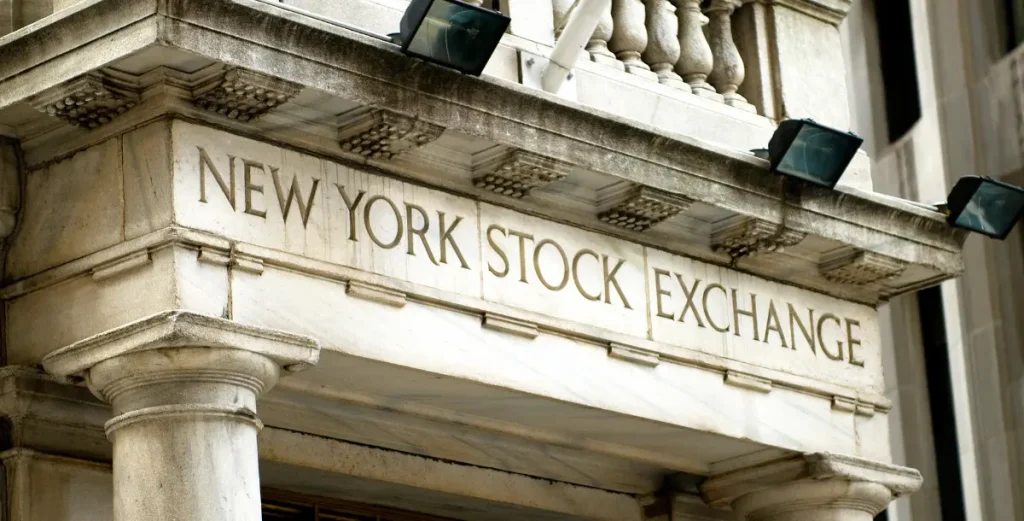
Earlier this year, the New York Stock Exchange (NYSE) signaled a historic shift in global finance by announcing the development of a tokenized securities platform. Seeking regulatory approval to launch, the NYSE aims to to bring a familiar market structure (qualified broker-dealer access, shareholder rights) into a model built for 24/7 trading and on-chain settlement.
This move marks the transition of tokenization from “proof-of-concept” to core market infrastructure. As regulated firms begin to tokenize existing financial products, the industry conversation is shifting from what is possible to what may soon become operational and commercially relevant.
What the NYSE Announced
The NYSE’s initiative is positioned as a digital marketplace for tokenized securities, featuring integrated trading and on-chain settlement.
The platform is a pillar of a broader strategy by its parent company, Intercontinental Exchange (ICE), to modernize post-trade and clearing infrastructure for a market environment that increasingly expects access beyond traditional weekday trading hours. Key organizational details include:
- Standalone Venue: The platform will operate as a separate NYSE venue rather than an extension of the existing exchange.
- Regulatory Alignment: Launch is targeted for late 2026, pending SEC and FINRA approvals.
Key Features of the NYSE Tokenized Securities Platform
The NYSE’s design choices differentiate this platform from traditional equity “plumbing” in several critical ways:
- 24/7 Operations: Continuous trading for U.S.-listed equities and ETFs.
- Instant (T+0) Settlement: Utilizing “tokenized capital” for immediate, on-chain finality.
- Dollar-Based Ordering: Orders sized in currency amounts rather than just share quantities.
- Stablecoin & Tokenized Deposit Funding: Explicit support for stablecoins and digital cash for seamless settlement.
- Fractional Shares: Built-in support for high-barrier assets.
- Hybrid Architecture: Tokenized shares remain fungible with traditional securities, while also supporting “born-on-chain” digital assets.
- Pillar Integration: Combining the NYSE’s high-speed Pillar matching engine with multi-chain blockchain interoperability.
Market Structure And Access
Unlike “walled-garden” crypto exchanges, the NYSE platform maintains non-discriminatory access for all qualified broker-dealers. It is a regulated market venue design that happens to use distributed ledger technology (DLT) for its infrastructure.
For investors, this means the legal substance of ownership—dividends, voting rights, and corporate actions—remains unchanged. The upgrade is purely functional: improving how assets are recorded, transferred, and funded.
What Tokenized Securities Mean for the NYSE Platform
Tokenized securities are traditional financial assets, such as shares of stock or ETF units, represented in digital form on blockchain-based infrastructure. The underlying asset itself does not change. What changes is how ownership is recorded, transferred, settled, and funded.
In the NYSE’s proposed model, token holders retain the core features investors expect from regulated securities, including dividends and governance rights. This signals a deliberate effort to preserve the legal and economic substance of ownership while upgrading the legacy infrastructure that supports trading and post-trade operations.
That upgrade is critical because the primary advantage of tokenized securities is not that they create a new kind of asset, but that they can improve how existing assets move through the system.
Traditional markets still rely on established settlement cycles, batch processing, and funding arrangements tied to limited operating hours. A tokenized model opens the door to faster settlement (T+0), continuous market access, and a more streamlined record of ownership and transfer.
The Shift to On-Chain Settlement
The NYSE announcement places much of that change in the post-trade layer. Instead of relying on legacy settlement cycles, the platform is built around on-chain settlement that moves closer to real time.
If successful, this could reduce the counterparty exposure that builds up between trade execution and final settlement. At the same time, it would require the industry to rethink liquidity management and collateral processes that were originally designed around delayed settlement windows.
Funding mechanics could also change alongside settlement. The initiative highlighted stablecoin-based funding, while reporting noted collaborations with major banks on tokenized deposits.
This points to a broader shift: Not only the security, but also the cash or cash-equivalent used to settle it, moves on modern rails. A 24/7 market cannot function smoothly if the asset trades continuously but funding and collateral remain tied to legacy banking schedules.
This distinction is also important for credibility. The platform is not positioning tokenized securities as offshore substitutes or synthetic lookalikes. Instead, they are being presented as regulated securities with familiar rights, distributed through qualified broker-dealers, but supported by infrastructure designed for faster settlement, more flexible funding, and a market that can operate beyond traditional trading hours.
Why This Platform Signals A Bigger Shift
This platform matters because it sits at the intersection of two broader market pressures:
1. Rising demand for 24/7 access to U.S. equities
The traditional equity market was built around fixed trading sessions, delayed settlement, and banking infrastructure that largely shuts down outside standard business hours.
That model looks increasingly out of sync with a market where investors, intermediaries, and liquidity providers expect instant access to capital across time zones.
ICE noted that the platform is part of a broader strategy to prepare clearing infrastructure for 24/7 trading and tokenized collateral integration, while Reuters reported that the proposed venue is designed around 24/7 operations, instant settlement, and stablecoin-based funding.
Regulatory filings from January 2026 referenced the SEC’s approval framework for overnight trading and noted that 24X and NYSE Arca may expand into those hours as market-data infrastructure matures.
Once exchanges design for longer trading windows, they must rethink the systems behind those trades. A market cannot realistically run around the clock if settlement and funding still depend on next-day processes. Tokenized infrastructure becomes the way to align post-trade operations with the availability modern markets are starting to demand.
2. Tokenization in regulated product design
Tokenization is no longer confined to pilots; it is appearing in formal regulatory pathways for mainstream products. The question is no longer whether assets can be tokenized, but whether regulated institutions can do so while preserving investor rights and compliance controls.
That is the logic behind the NYSE framing. This is not a crypto-style alternative market. It is a regulated venue where tokenized securities retain familiar features while the underlying infrastructure moves to blockchain-based rails.
The Real Story: Redesigning Market Infrastructure
The bigger shift is that market infrastructure is being redesigned around speed, continuity, and the programmable movement of both assets and cash.
The NYSE’s platform signals that tokenization is being evaluated as a practical answer to a real-world problem: how to make regulated securities markets function more efficiently in a 24/7 financial environment.
Future-Proof Your Platform: Tokenize at Scale with ChainUp
A tokenized securities venue needs more than a digital wrapper for traditional assets. It requires a robust infrastructure that can support issuance, management, settlement, and compliance at scale, especially as markets move toward 24/7 trading, tokenized collateral, and more complex operational demands.
Scale Your Tokenized Future
A tokenized securities venue needs more than a digital wrapper for traditional assets. It requires robust infrastructure that supports issuance, management, settlement, and compliance at scale—especially as the global market pivots toward 24/7 trading and complex on-chain collateral demands.
Don’t just experiment with tokenization—dominate the market with it. Whether you are migrating traditional securities or launching a digital-native platform, ChainUp delivers the battle-tested, end-to-end infrastructure you need to move from pilot to production. Stop managing multiple vendors and start scaling with a single, unified partner.