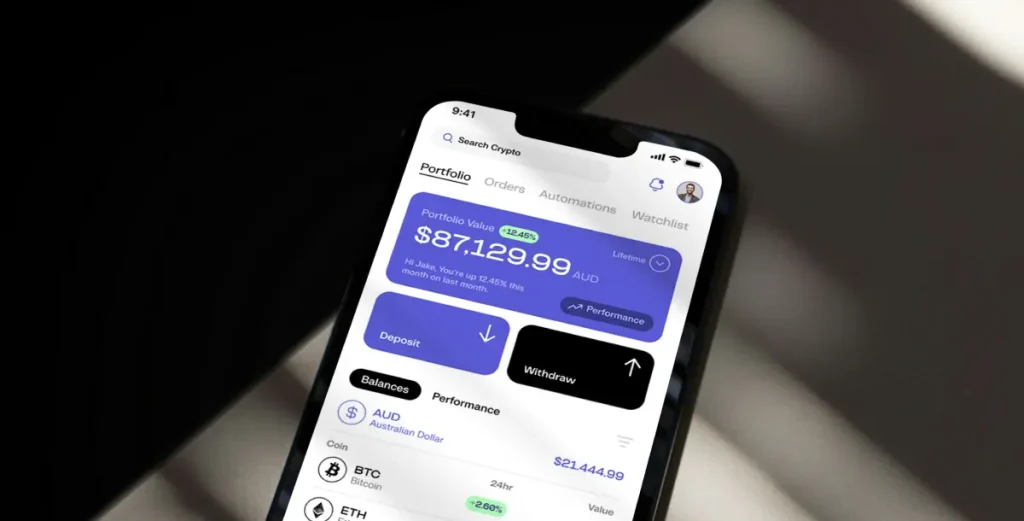

In early 2026, the global crypto market reached a staggering $3 trillion capitalization. Yet a fundamental paradox remains: while 700 million people now own digital assets, the vast majority still struggle to use them in their daily lives.
For years, the industry focused on “The Tech”—faster consensus, Layer 2 scaling, and complex smart contracts. But the real barrier to mass adoption isn’t the blockchain; it’s the “Last Mile” of value.
To bridge this gap and encourage mass-market participation, the industry is shifting towards a critical completion layer: Integrated On/Off-Ramp Solutions.
The Two Bridges to the Real World
If we want the “next billion” to enter Web3, digital money must behave like real-world money. This requires a seamless flow between the digital wallet and physical commerce.
1. Payment Solutions (The Spending Layer)
The most direct way retail users “touch” crypto today is through integrated payment cards. By merging a user’s digital balance with Visa or Mastercard networks, platforms transform crypto from a speculative asset into a usable currency. This removes the psychological barrier of “trapped” funds.
2. On/Off-Ramp Gateways (The Onboarding Layer)
While cards handle the spending (off-ramp), gateways handle the onboarding. In 2026, 55% of new crypto users expect a banking experience that includes crypto, rather than a standalone crypto experience. They want to pay with fiat and see crypto in their balance instantly.
The Plumbing of Modern Finance: On-Ramps and Off-Ramps
A crypto onramp is the mechanism that allows users to convert traditional legal tender (USD, EUR, JPY) into digital assets. Conversely, an off-ramp converts those assets back into spendable, bank-account-ready fiat.
Behind the simple user expectation of instant funding lies a complex infrastructure. A high-performance onramp must provide:
- A Familiar Experience: Instant bank transfers, Apple Pay, and local methods like ACH (US) or SEPA (EU).
- Operational Integrity: Transparent pricing, rate locking, and instant KYC.
- Fast Settlement: Moving funds between traditional ledgers and blockchain in seconds, not days.
The Critical Layer for Platform Completion
Without native integration, a platform remains a “disconnected island”, forcing users to navigate external exchanges just to participate. By embedding this layer directly into the ecosystem, platforms can bridge the gap between discovery and action, ensuring that the entire financial journey happens within a single, controlled environment.
- Acquisition: Around 60% of new users require a native on-ramp to begin their journey.
- Retention: Paradoxically, the ability to exit increases a user’s willingness to stay. When users know they can exit to fiat easily, they feel safer depositing larger amounts of capital.
- Monetization: An integrated ramp transforms a friction point into a revenue stream, allowing platforms to capture transaction fees that would otherwise leak to third parties.
From Infrastructure Nightmare to Instant Deployment
Developing proprietary financial rails is an intensive undertaking that can significantly deplete the resources of even the most well-capitalized roadmaps. Beyond the initial engineering, it is a multi-year commitment to navigating a global landscape of regulatory and technical complexities.
The Structural Risks of In-House Development
Choosing to build a bespoke on/off-ramp solution introduces several critical points of failure:
- The Regulatory Labyrinth: Licensing is not a one-time event but a continuous global obligation. Organizations must secure and maintain Virtual Asset Service Provider (VASP) and Money Service Business (MSB) credentials across multiple jurisdictions. In the current 2026 regulatory climate, even a minor compliance oversight can result in immediate platform-wide freezes and severe legal repercussions.
- The Banking “Iron Curtain”: Traditional financial institutions maintain a highly risk-averse stance toward digital assets. Establishing direct payment “rails” requires years of relationship management and the demonstration of institutional-grade Know-Your-Customer/Anti-Money Laundering (KYC/AML) protocols. Without established credentials, many platforms face de-banking before processing their first transaction.
- The Fraud and Chargeback Liability: While blockchain transactions are final, credit card and traditional payment systems are not. By internalizing a gateway, a firm assumes full liability for “friendly fraud” and sophisticated illicit activity. Without a specialized, partner-driven fraud engine, the cost of chargebacks can rapidly erode operational margins.
- The Compounding Technical Debt: Maintenance is a perpetual drain on talent. Whenever a banking partner updates an Application Programming Interface (API), a network undergoes a hard fork, or new payment standards (such as FedNow or Pix) emerge, senior engineering resources must be diverted from core product innovation to maintain legacy payment rails. This diversion represents a significant, often hidden, Operating Expense (OpEx).
Strategic Mitigation: The Rampnow Integration
Rampnow was engineered to eliminate these infrastructure barriers, allowing organizations to bypass the operational “Innovation Tax” of in-house development. By leveraging their established regulatory framework, banking relationships, and battle-tested fraud mitigation, your internal team can remain focused on your primary product roadmap.
As a preferred partner for ChainUp clients, Rampnow provides the institutional-grade performance necessary to transform a standalone application into a comprehensive financial ecosystem.
- Instant Global Scale: Immediate connectivity to 60+ fiat currencies and 70+ blockchain networks, providing the reach required for a global user base.
- Intuitive User Flow: A simplified transaction experience designed to minimize drop-off and support high conversion rates for both retail and institutional users.
- Seamless Lifecycle Completion: True end-to-end functionality with integrated on/off-ramp support. Fiat withdrawals are fully optimized for key markets, including EUR, PHP, INR, IDR, and VND.
- Comprehensive Payment Rails: Support for the funding methods users already trust, including Visa, Mastercard, SEPA, and Open Banking.
- Revenue Acceleration: A revenue-sharing model that transforms essential infrastructure into a sustainable growth engine for your business.
Operational Stability and Compliance
Beyond the technology, Rampnow provides the compliance and support foundation essential for secure, scalable transactions.
- Managed Compliance: Offload the end-to-end regulatory burden. Rampnow handles the full process from KYC/AML verification to global licensing.
- Accelerated Deployment: A robust, flexible API allows for a customized launch in weeks rather than the years required for proprietary builds.
- Technical Stability: Partnership-level support with dedicated account managers and 24/7 technical assistance to ensure continuous uptime and operational stability..
In 2026, market leaders aren’t just defined by their code, but by their ability control the flow of capital. Stop building the plumbing and start building the future.
Ready to Close the “Last Mile” Gap?
Infrastructure should be a competitive advantage, not a bottleneck. Don’t let your platform remain a financial island in a market that demands seamless liquidity.
To explore how this integration fits into your existing ChainUp stack, schedule a brief alignment call with the Rampnow team today.