Key Takeaways
- Search engine for the blockchain: A block explorer acts like Google for public ledgers, allowing anyone to search for transactions, wallets, and smart contracts.
- Transforms raw data into transparent proof: By pulling complex cryptographic data from network nodes and organizing it into a readable interface, explorers eliminate the need for centralized intermediaries and allow users to independently verify any payment.
- Essential for security and compliance: Developers use explorers to debug code, while compliance teams use them to track funds and prevent illicit activity.
- Empowers the end user: Users can check wallet balances, track real-time status of pending transfers, and view historical activity for any public address.
As of 2026, over $120 billion in cryptocurrency transactions are processed daily worldwide. Yet, most individuals cannot explain how to verify a single transfer. The ability to independently verify financial data is the core promise of decentralized technology.
A blockchain explorer solves this exact problem. Think of it as the “Google” of the blockchain, completely open to the public and capable of transforming complex strings of code into readable, actionable insights.
What Is a Blockchain Explorer?
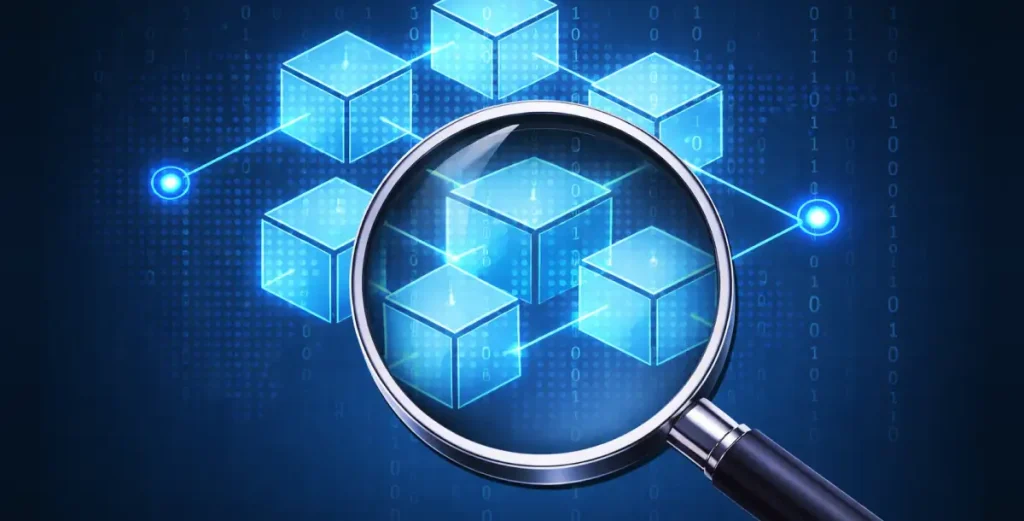
A blockchain explorer is a specialized software application that functions as a search engine for blockchain data. It allows anyone to extract, visualize, and review network metrics in real time.
Users access these platforms via standard web browsers. Once on the site, they can look up specific transactions, inspect blocks, monitor wallet addresses, and read smart contracts.
Every blockchain requires its own distinct block explorer. For instance, Bitcoin data is accessible via tools like Blockchain.com, while Ethereum requires Etherscan. Whether the network is public or private, the explorer serves as the primary window into the ledger’s ongoing activity.
How Does a Blockchain Explorer Work?
A blockchain explorer works by extracting raw cryptographic data from network nodes, indexing it into a searchable database, and displaying it through a clean user interface.
Transforming raw data into a readable dashboard requires robust technical architecture. The process happens in three distinct steps.
-
How is data pulled from blockchain nodes?
Blockchains consist of thousands of computers, known as nodes, that constantly record new information. Explorers use application programming interfaces (APIs) and relational databases to extract this raw data directly from the network.
Reliable platforms rely on robust enterprise blockchain node services. This ensures the information updates in milliseconds without dropping connections.
-
How does indexing organize the data?
Raw on-chain data is incredibly dense and difficult to read. The explorer software categorizes this raw information into a highly searchable database.
It organizes the chaos into neat tables containing transaction IDs, wallet addresses, and newly mined blocks. This indexing process enables users to query a specific transfer from years ago in under a second.
-
How does the interface display on-chain data?
The final step involves presenting the organized data through a clean user interface. The platform displays interactive dashboards, live charts, and detailed tables.
Behind the scenes, enterprise infrastructure providers power these systems. They handle the massive computational load required to make the public ledger accessible to everyday users.

Visual diagram showing the data flow from Blockchain Nodes to the Indexing Database, then to the User Interface.
What Are the Key Features of a Blockchain Explorer?
Blockchain explorers serve as comprehensive analytics hubs. Most major explorers share several core functionalities designed to make on-chain data transparent.
- Transaction tracking (TXID lookup): Enter a unique transaction hash to see its exact status, sender, and recipient.
- Wallet address monitoring: View the total balance and historical activity of any public wallet.
- Block inspection: Analyze newly mined blocks, including their size, miner identity, and timestamp.
- Network metrics: Track the mempool (unconfirmed transactions), network hashrate, and average gas fees.
- Smart contract tracking: Monitor decentralized application (dApp) usage and automated code execution.
Why Do Blockchain Explorers Matter?
Blockchain explorers matter because they allow networks to remain entirely trustless. They eliminate the need for intermediaries, such as banks or clearinghouses, to verify that a payment has been processed.
Anyone with an internet connection can independently verify transactions. This transparency is critical for traders verifying deposits, developers testing code, and institutions auditing large-scale fund movements. Without a public ledger dashboard, cryptocurrency would operate in the dark. Explorers keep the ecosystem honest and accountable.
What Are the Real-World Use Cases?
The ability to check crypto transactions extends far beyond simple curiosity. Various market participants rely heavily on these tools daily to conduct business.
-
Merchant Payment Verification
Merchants use explorers to confirm payment statuses instantly. By searching the transaction ID, they can check if a transfer is pending or fully completed based on block confirmations. For institutions using crypto payment infrastructure, this is essential for settling cross-border transfers.
-
Wallet Activity and Sentiment Analysis
Market analysts monitor high-net-worth wallet addresses, often referred to as “whales”, to spot impending market shifts. Organizations use institutional-grade explorers to reconcile internal ledgers with the public chain.
-
Smart Contract Debugging for Developers
Developers use explorers to read smart contract code directly on the network. This allows them to track failed executions, monitor gas consumption, and patch vulnerabilities before they become critical.
-
Network Health and Operational Monitoring
Miners and validators track network metrics to optimize their hardware operations. Explorers provide real-time data on the mempool size, mining difficulty, and overall hash rate. High-traffic periods often lead to higher transaction fees, which users can monitor before submitting a transfer.
-
Compliance and Forensic Audit Trails
Regulators and compliance teams trace the flow of funds to detect illicit activity. Institutions use explorers alongside advanced Know Your Transaction (KYT) tools for forensic blockchain analysis, ensuring stolen funds have nowhere to hide.
What Are Some Popular Blockchain Explorers?
| Explorer | Blockchain | Key Features |
| Etherscan | Ethereum | Smart contracts, gas tracker, token approvals |
| Blockchain.com | Bitcoin | Transaction tracking, network hash rate charts |
| Blockchair | Multi-chain | Advanced analytics, multi-network search engine |
| BscScan | BNB Chain | Token tracking, validator node metrics |
How to Track a Payment in 5 Steps
Knowing how to use blockchain explorers is an essential skill for anyone interacting with digital assets. Follow these steps to track a payment:
- Locate the Transaction ID (TXID): Find the unique hash code provided by your wallet or exchange after initiating a transfer.
- Open the Relevant Explorer: Navigate to the platform for that specific network (e.g., Etherscan for Ethereum).
- Paste the TXID: Enter the hash into the main search bar and hit enter.
- Review the Data: The dashboard will display the transaction status as pending, successful, or failed.
- Check the Details: Review the block confirmations, network fees paid, and the exact sender and receiver addresses.
How Do Explorers Compare to Blockchain Analytics Tools?
Explorers provide raw, uninterpreted data, while blockchain analytics tools provide interpreted, contextualized insights for institutional use.
It is crucial to differentiate between basic explorers and advanced analytics platforms. They serve different purposes for different audiences.
| Feature | Blockchain Explorer | Blockchain Analytics Platform |
| Data Type | Raw, uninterpreted on-chain data | Interpreted, contextualized insights |
| Operation | Manual searches and individual queries | Automated intelligence and pattern detection |
| Target User | Everyday users, developers, and independent traders | Institutional-grade compliance and forensic teams |
Firms looking to build scalable operations require more than a basic explorer. Platforms like ChainUp underpin these sophisticated data layers. By providing enterprise-grade wallet infrastructure and institutional node support, they enable advanced analytics tools to securely process raw data at an institutional scale.
Why Blockchain Explorers Are Essential to Web3
The blockchain explorer is the ultimate tool for transparency in the Web3 ecosystem, transforming an opaque digital ledger into an accessible, verifiable public record.
As the digital economy evolves, block explorers are becoming increasingly sophisticated tools for transparency. From verifying simple payments to conducting deep forensic analysis, they are essential for ensuring the decentralized world remains open and accountable to all participants.
For institutions requiring deeper oversight, ChainUp’s Know Your Transaction (KYT) solution takes this transparency a step further. By integrating real-time transaction monitoring and automated risk scoring, we help businesses move beyond simple data lookups to achieve comprehensive regulatory compliance and security.
Ready to build secure, scalable blockchain systems tailored to your institutional needs?
Explore our enterprise solutions, including our industry-leading KYT tools, and talk to our team today.