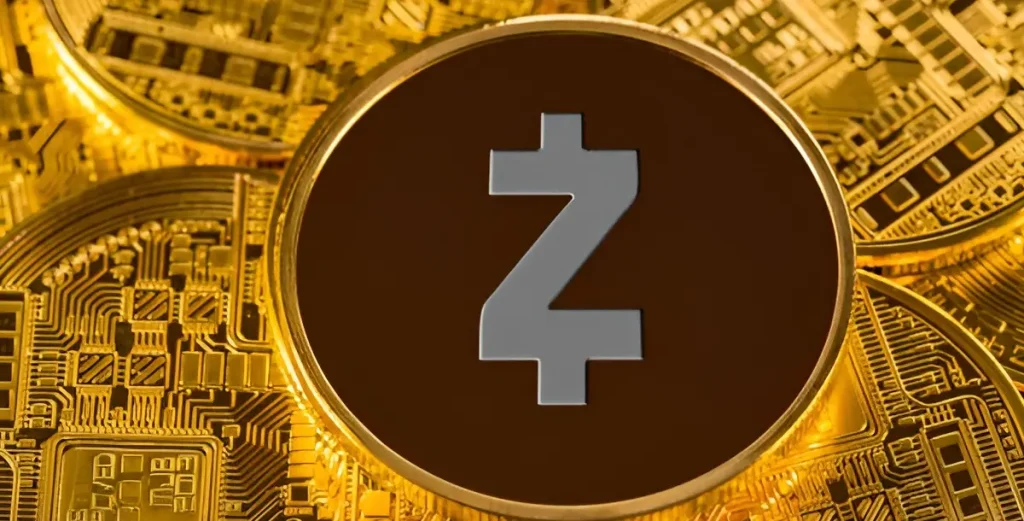
Zcash (ZEC) is a privacy-focused cryptocurrency that uses zero-knowledge proofs to enable confidential transactions on a public blockchain. Unlike Bitcoin, where all transaction details are visible on the ledger, Zcash gives users the choice to shield transaction details—including sender, receiver, and amount—while maintaining network security through cryptographic verification.
As of early 2026, Zcash is seeing a significant resurgence in utility. While historically only a small portion of its supply was shielded, the shielded supply has surged to approximately 30% following the successful rollout of the Zodl (formerly Zashi) wallet ecosystem. This makes Zcash a primary focus for institutional entities looking for “regulated privacy” solutions.
What Is Zcash?
Zcash launched in October 2016 as a fork of Bitcoin, built on the Zerocash protocol research. Like Bitcoin, Zcash has a fixed supply cap of 21 million coins and uses proof-of-work mining. The native token is ZEC.
What sets Zcash apart is its optional privacy model. Users can choose between transparent transactions (similar to Bitcoin) or shielded transactions that leverage advanced cryptography to keep details private. This flexibility makes Zcash unique among privacy coins—it’s not privacy-by-default like Monero, but privacy-by-choice.
How Does Zcash Work?
At the heart of Zcash’s privacy technology are zk-SNARKs (Zero-Knowledge Succinct Non-Interactive Arguments of Knowledge). Think of it this way: a zero-knowledge proof lets you prove you know something without revealing what that something actually is.
Here’s a simple analogy. Suppose you want to prove you’re over 21 to buy alcohol, but you don’t want to show your birth date. A zero-knowledge proof would let you demonstrate you meet the age requirement without revealing your actual birthday. That’s the power zk-SNARKs bring to blockchain transactions.
In Zcash, zk-SNARKs allow the network to verify that a transaction is valid—that the sender has sufficient funds and isn’t double-spending—without exposing who sent it, who received it, or how much was transferred. This cryptographic innovation, detailed in the original Zerocash paper, represents one of the most significant advances in blockchain privacy technology.
Following the NU5 network upgrade, Zcash moved to the Halo 2 proving system. This was a massive technical milestone because it removed the “trusted setup” (a long-standing point of criticism) and enabled recursive proofs, making the network more scalable and ready for potential Layer 2 integrations.
Transparent vs Shielded Transactions
Zcash utilizes a dual-address system:
- t-addresses (transparent): These work like Bitcoin addresses. All transaction details are visible on the public blockchain. Anyone can see the sender, receiver, and amount.
- z-addresses (shielded): These addresses leverage zk-SNARKs to encrypt transaction data. When you send ZEC from a z-address to another z-address, the transaction details remain completely private.
Users can also send between transparent and shielded addresses, though this creates a “mixed” transaction where some details remain visible. For maximum privacy, transactions should stay entirely within shielded pools (z-to-z transfers).
One particularly useful feature is view keys, optional disclosure tools that let users selectively reveal transaction details to auditors, regulators, or other authorized parties.This selective disclosure capability matters for institutional adoption.
A 2018 empirical analysis by Kappos et al. found that most Zcash users were not leveraging shielded transactions at the time, partly because exchanges and services hadn’t built infrastructure to support them. That’s changing as regulatory frameworks evolve and institutional players seek compliant privacy solutions.
What Is ZEC Used For?
Zcash is particularly valuable for institutions and businesses handling sensitive financial information. Its privacy features enable secure and confidential transactions while maintaining the flexibility to meet regulatory requirements. Here’s how ZEC supports these use cases:
- Privacy for Sensitive Transactions: Institutions can use ZEC to protect financial data, ensuring that sensitive commercial information remains confidential—whether for competitive reasons, client privacy, or security concerns.
- Regulatory Compliance with Privacy: Zcash’s view keys feature allows businesses to maintain transaction privacy while providing transparency to regulators or auditors when needed, striking a balance between confidentiality and compliance.
- Cross-Border Financial Operations: With fast block times (approximately 75 seconds) and low transaction fees, ZEC is practical for international transfers, especially in regions with limited banking infrastructure or high surveillance risks.
- Portfolio Diversification: ZEC is listed on major exchanges globally, offering institutions an opportunity to diversify their digital asset holdings. However, support for shielded transactions varies across exchanges due to regulatory and technical considerations.
For institutions, Zcash provides a unique combination of privacy and compliance, making it a powerful tool for managing sensitive financial operations in the digital asset ecosystem.
Zcash Mining and Consensus Mechanism
Zcash traditionally used a proof-of-work consensus mechanism with the Equihash mining algorithm. Equihash was specifically designed to be memory-hard, making it resistant to specialized ASIC mining hardware (at least initially). The goal was to keep mining more accessible to everyday users with standard computer equipment.
The current block reward is 3.125 ZEC, following the network’s first halving event in November 2020. Like Bitcoin, Zcash undergoes halving approximately every four years, gradually reducing new coin issuance until the 21 million supply cap is reached.
What makes Zcash’s mining model unique is the 20% development fund allocation. Of each block reward:
- 80% goes to miners
- 20% is distributed among the Electric Coin Company (ECC), Zcash Foundation, and Major Grants (community-driven funding)
This self-sustaining funding model ensures ongoing protocol development without relying on external investors or corporate backing. It’s a governance innovation that has influenced other blockchain projects seeking sustainable development models.
Zcash vs Bitcoin: What’s the Difference?
While Zcash originated as a Bitcoin fork, key differences have emerged:
| Feature | Zcash (ZEC) | Bitcoin (BTC) |
| Privacy | Optional shielded transactions using zk-SNARKs | Pseudonymous (all transactions publicly visible) |
| Mining Algorithm | Equihash (memory-hard) | SHA-256 |
| Supply Cap | 21 million | 21 million |
| Settlement Speed | ~75 seconds block times | ~10 minutes block times |
| Transaction Disclosure | Optional view keys for selective disclosure | Fully public ledger |
| Fungibility | High (when using shielded pool) | Limited (coins can be “tainted” by transaction history) |
Fungibility deserves special attention. As Bitcoin transactions are traceable, certain coins can become “tainted” if they’ve been involved in illicit activity. This means one bitcoin isn’t always equivalent to another bitcoin, some may be rejected by exchanges or services. Zcash’s shielded pool solves this problem by making transaction history invisible, ensuring all ZEC are functionally identical.
Understanding Zcash’s Role in Institutional Digital Asset Infrastructure
Zcash is more than just another cryptocurrency; it’s a pioneer in cryptographic techniques that redefine privacy, verification, and trust in decentralized systems. Its optional privacy model offers a practical solution for financial confidentiality, balancing privacy needs with regulatory compliance.
For institutions managing sensitive financial information, Zcash provides secure and confidential transactions while enabling transparency through tools like view keys. This makes it especially appealing for businesses, exchanges, and custodians handling sensitive data or cross-border operations.
Integrating privacy-focused assets like Zcash requires robust infrastructure, from custody solutions for shielded and transparent addresses to compliance frameworks that meet KYT (Know Your Transaction) standards. Exchanges and platforms must also implement advanced API integrations and order book systems to support Zcash’s unique transaction types.
At ChainUp, we deliver institutional-grade infrastructure to support privacy-enabled assets like Zcash. Our secure MPC wallet solutions, compliance-ready frameworks, and white label exchange solutions empower platforms to integrate innovative cryptocurrencies seamlessly. Connect with our team to explore how we can help you build privacy-ready exchange platforms with the security and compliance your business demands.