
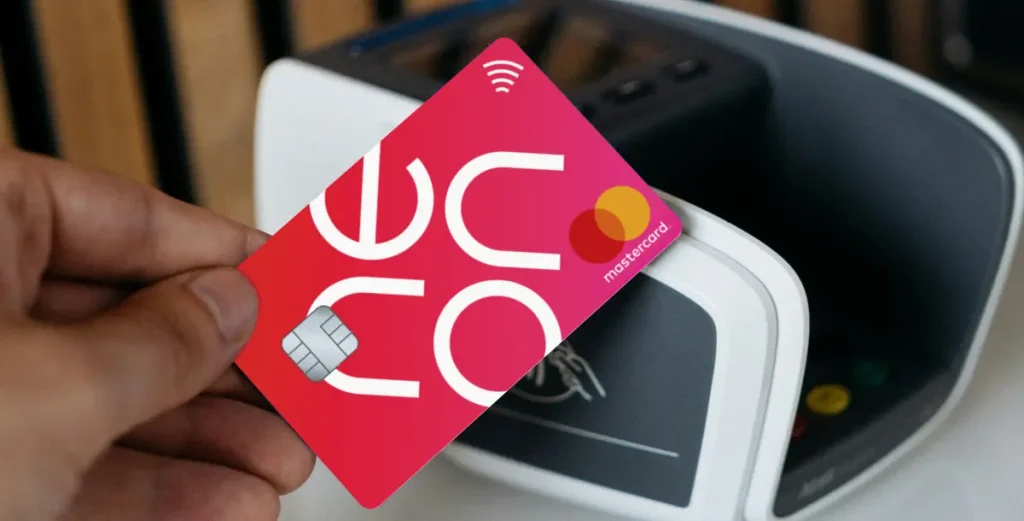
Banking has moved from physical branches to digital screens, but not every “banking app” is technically a bank. A neobank sits in that gap. It delivers a bank-like experience through an app-first product, often with lower fees and faster onboarding, while operating under different licensing and custody models depending on the country and the company.
This guide explains the definition of a neobank, its core features, and how these digital-first providers operate behind the scenes in today’s economy.
What is a Neobank?
A neobank is worth paying attention to because it rebuilds everyday banking around speed, lower fees, and automation. It is a digital-first financial provider that delivers banking-style services—accounts, cards, payments, transfers, and sometimes lending—primarily through an app.
The difference isn’t the lack of physical branches. It’s the operating model: lower overhead, rapid product iteration, and customer experiences designed for self-serve control.
One critical detail: Some neobanks hold a full banking licence. Others partner with a licensed bank or operate as a regulated e-money/payment institution. This affects deposit protection, what products they can legally offer (especially lending), and what happens during disputes or failures.
Neobank vs Traditional Bank vs Online Bank
A traditional bank often runs a branch-led model with legacy systems and slower change cycles. An online bank is usually just a traditional bank’s digital channels. A neobank is digital-native, competing by shipping features faster, cutting fees through lower overhead, and giving customers more in-app control.
| Category | Traditional bank | Neobank |
| Access | Branch + digital | Digital-first, usually no branches |
| Product range | Broad (lending, wealth, business) | Often starts narrow; expands over time |
| Fees | Often more complex | Often simpler/leaner |
| Regulation | Full banking rules | Either bank rules or partner-bank/e-money rules |
| Deposit protection | Standard bank scheme | Depends on model (licensed bank vs partner bank vs EMI/PI) |
Top Neobank Features
Neobanks win by giving users more control, faster money movement, and lower friction in the moments that matter: spending, transfers, travel, budgeting, and account security. Traditional banks can offer similar features, but neobanks tend to execute them better because they’re built as software products, not branch-led systems.
1. Self-serve control that saves you in the moment
Neobanks push power to the user instead of forcing a call centre loop.
- Freeze/unfreeze a card instantly
- Create or delete virtual cards for online purchases
- Set limits, controls, and security toggles without waiting
Why it matters: you stop problems fast, instead of reporting them after damage is done.
2. Real-time money visibility (less “where did my money go?”)
Neobanks treat notifications and transaction details as a core feature.
- Instant alerts for spend and transfers
- Cleaner transaction data and categorisation
- Faster fraud spotting because you see movement immediately
Why it matters: you catch mistakes, fraud, and overspending earlier.
3. Better travel and cross-border value
This is where many neobanks beat traditional banks on day one.
- Multi-currency wallets in-app
- Lower FX markups than typical bank spreads
- Faster, cheaper international transfers (depending on provider/rails)
Why it matters: fewer hidden costs when you spend or move money overseas.
4. Automation that reduces admin
Neobanks treat everyday money management like workflows.
- Rules-based saving (round-ups, scheduled transfers, “pay yourself first”)
- Goals you can track without extra apps
- Smarter alerts (low balance, upcoming bills)
Why it matters: you build habits without thinking about it.
5. Lower fees through a lighter operating model
With fewer legacy systems and no branch footprint, many neobanks compete on cost.
- Fewer account fees (varies by provider)
- Cheaper transfers and card usage
- Transparent pricing in-app rather than fine print
Why it matters: you keep more of your money, with fewer surprise charges.
How Neobanks Work: Three Models
A neobank can look identical on the front end—same User Interface (UI), same debit card, same “banking” language—while operating under very different legal and regulatory structures.
This is where neobank stops being a vibe and becomes a practical question: Who holds the money, under what rules, and what protections apply if something goes wrong?
Most neobanks fall into one of three models:
Model 1: Fully licensed digital bank
These neobanks are banks. A banking regulator supervises them, and they can usually offer a broader range of regulated products (subject to local rules).
For example, Monzo states it’s a fully licensed UK bank regulated by the PRA and FCA. N26 states it holds a full German banking licence from Federal Financial Supervisory Authority (BaFin) and notes deposit protection up to €100,000 under the German scheme.
What this usually means for users
- Deposit protection schemes typically apply (based on local eligibility and limits).
- The neobank can directly provide core banking services because it holds the licence.
Model 2: Fintech front-end + partner bank (Banking-as-a-Service)
Here, the neobank brand builds the app, User Experience (UX), and product layer—but a licensed partner bank provides the underlying deposit accounts. Chime spells this out clearly: it says it’s a financial technology company (not a bank) and that banking services come through partner banks (The Bancorp Bank, N.A. or Stride Bank, N.A.).
Deposit insurance (where available) attaches to the insured bank and the account structure, not to the fintech brand itself.
In the US, the Federal Deposit Insurance Corporation (FDIC) explicitly warns that nonbanks are never FDIC-insured, and coverage often depends on when funds reach an FDIC-insured bank and whether “pass-through” conditions apply.
What this usually means for users
- You should verify: Which bank holds the deposits? When do funds become insured? What conditions apply?
Model 3: E-money institution or payment institution (common in some markets)
In markets like the United Kingdom/ European Union, some neobank-like apps operate as electronic money institutions (EMIs) or payment institutions (PIs). These firms follow a different authorisation regime than banks, and the FCA outlines the routes to become authorised/registered as an EMI or PI.
What this often means
- The provider may safeguard customer funds under specific rules rather than hold deposits like a bank. That can change how funds are protected and how recovery works if the firm fails (and it often affects which products the firm can offer).
Pros and Cons of Using a Neobank
Neobanks can feel like an upgrade because they remove friction from everyday banking—faster setup, clearer money visibility, and fewer “why is this fee here?” moments. The trade-off is that not every neobank operates under a full bank licence, and some services (like cash deposits) can still lag behind traditional banks. Here’s a clean comparison.
| Pros of a Neobank | Cons of a Neobank |
| Faster onboarding and simpler workflows (digital setup, fewer steps, less paperwork) | Deposit protection can be confusing if the neobank uses a partner-bank model and you don’t know who actually holds the funds |
| Cleaner app experience + real-time money visibility (instant alerts, easier tracking) | Limited cash services in some cases (cash deposits, certain cheque services, branch-style support) |
| Fee structures that often beat branch-led banks (more transparent pricing, fewer maintenance fees) | Customer support quality varies and can feel slow during disputes or high-demand periods |
| Useful controls (instant card freeze, spending limits, virtual cards, merchant controls) | Coverage and product range can vary depending on whether it’s a licensed bank, partner-bank fintech, or e-money model |
Leading Neobanks at a Glance
Neobank lineups shift by country, and the same brand can operate under different licences in different markets. That’s why “examples” matter only if you tie them back to the operating model: licensed bank, partner-bank fintech, or regulated e-money/payment institution. The names below work as examples because each one clearly represents a real-world version of how neobanks structure regulation, deposits, and customer protections.
Monzo (UK) — a fully licensed digital bank model
Monzo works as a clean example of a licensed neobank because it states it’s a fully licensed UK bank and sits under the UK’s regulatory framework (PRA/FCA). That makes Monzo a reference point for what “neobank” looks like when the company behind the app is the actual regulated bank.
N26 (Europe) — a mobile-first bank with bank-level protections
N26 fits the licensed bank model in Europe and spells out the key institutional proof points: it states it operates with a full German banking licence (BaFin) and references deposit protection up to €100,000 under the German deposit protection scheme. That makes N26 a strong example of a neobank that runs under bank supervision while keeping a mobile-first product experience.
Chime (US) — a fintech neobank using partner banks (BaaS)
Chime is a clean example of the partner-bank model because it explicitly says it’s not a bank and that its banking services come through partner banks (The Bancorp Bank, N.A. and Stride Bank, N.A.). This matters because it highlights the key distinction many users miss: the app brand can differ from the institution that actually holds deposits and provides FDIC-insured accounts (subject to conditions).
Revolut (UK/EU + expansion) — multi-market licensing strategy in motion
Revolut works as an example of a neobank scaling across jurisdictions, where licensing strategy becomes part of the growth playbook. In late January 2026, Revolut announced it launched full banking operations in Mexico through Revolut Bank S.A.—its first bank launched outside Europe—showing how large neobanks expand by securing local permissions and rolling out bank-grade services market by market.
GXS Bank (Singapore)— a MAS-licensed digital bank built for “embedded” banking
GXS is a clean Singapore example because it states it holds a banking licence issued by the Monetary Authority of Singapore (MAS) and positions itself as a bank you can access through its own app and partner ecosystems like Grab and Singtel Dash. That makes it useful for explaining how Asian neobanks often scale through distribution, not branches—bank licence + super-app reach.
Is a Neobank Safe?
A neobank isn’t defined by how modern the app looks. It’s defined by what sits behind it. Safety comes from pairing a low-friction experience with hard guardrails—custody controls, payment integrity, and compliance.
Building a neobank or a digital wallet in 2026 is about providing a seamless bridge to the digital economy. High-value users are moving capital to platforms that treat crypto as a core asset. To keep that “flow,” your infrastructure must handle the complex handoff between fiat and blockchain without friction.
Why the “Trust Layer” is Your Real Product
If you’re building a neobank, launching a digital wallet, or modernizing a banking app, the job isn’t UI polish. It’s about shipping infrastructure that removes friction without weakening controls.
ChainUp provides the critical link that connects your banking core to the global crypto market:
- Security That Scales: Instead of managing vulnerable private keys, our MPC (Multi-Party Computation) wallet architecture splits the “keys” into multiple parts. This eliminates a single point of failure. It gives your neobank the same level of security as a major global exchange, keeping assets safe even as your user base grows into the millions.
- Built-in Compliance: In a banking environment, crypto shouldn’t be a compliance headache. We provide AML-ready transaction rails and real-time monitoring (KYT). This plugs directly into your existing workflows, ensuring every transaction is screened for risk so your platform stays as audit-ready as it is user-friendly.
Ship the Features Customers Feel
ChainUp supports your foundation with production-ready wallet infrastructure, custody-grade permissions, and monitoring designed for regulated environments. We handle the “plumbing”—the node management, the signing ceremonies, and the settlement logic—so you can focus on building the features that win the market.
Ready to evolve your banking platform? Contact ChainUp today to learn how our infrastructure can power your digital asset strategy.